 Skip to content
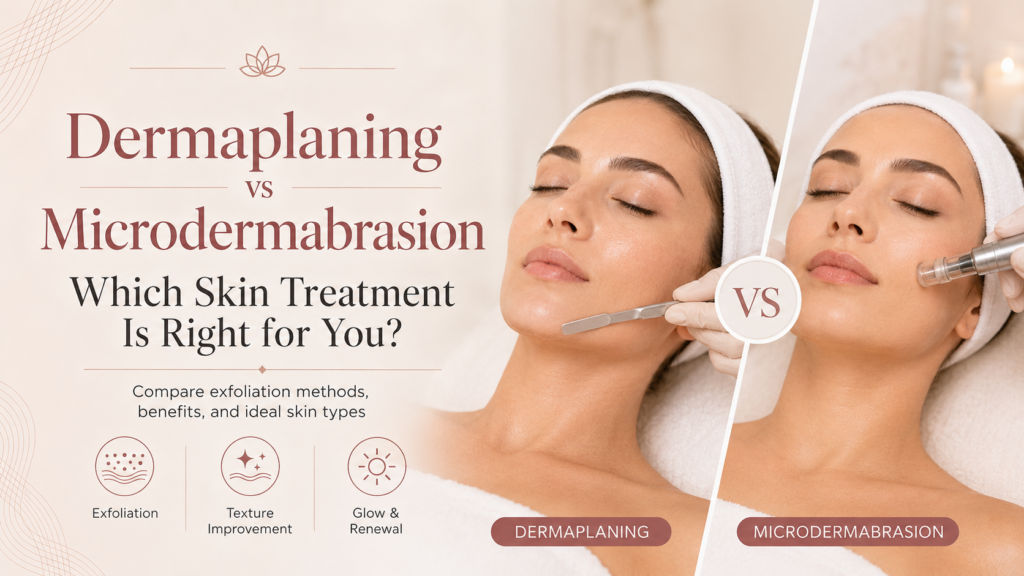
Healthy skin rarely comes from random treatments. Most people see better results when they choose procedures based on their skin type, texture concerns, and long term goals. That is why the debate around Dermaplaning vs Microdermabrasion has become so common in skincare clinics and beauty consultations.
Both treatments focus on exfoliation and skin renewal, but they work very differently. One removes dead skin and peach fuzz with a surgical blade, while the other uses crystal or diamond tip technology to resurface the skin. Choosing the wrong option for your skin can lead to irritation, wasted money, or disappointing results.
Understanding the difference between dermaplaning and microdermabrasion helps you make a smarter decision for smoother, brighter, and healthier skin.
Dermaplaning vs Microdermabrasion Comparison Table
| Feature | Dermaplaning | Microdermabrasion |
| Treatment Method | Uses sterile surgical blade | Uses crystals or diamond tip device |
| Main Purpose | Removes dead skin and facial hair | Exfoliates and resurfaces skin |
| Best For | Dull skin and peach fuzz | Acne scars and uneven texture |
| Downtime | Minimal | Mild redness possible |
| Pain Level | Painless | Mild scratching sensation |
| Suitable for Sensitive Skin | Often yes | Sometimes irritating |
| Hair Removal | Yes | No |
| Treatment Time | 30 to 45 minutes | 30 to 60 minutes |
| Recommended Frequency | Every 3 to 4 weeks | Every 2 to 4 weeks |
| Ideal Skin Concerns | Dryness and dullness | Texture and clogged pores |
What Is Dermaplaning?
Dermaplaning is a manual exfoliation treatment that removes dead skin cells and fine facial hair using a sterile surgical blade.
The blade gently scrapes the top layer of dead skin from the face. This process creates a smoother surface and allows skincare products to penetrate more effectively.
Many people choose dermaplaning treatments because the results are visible immediately after the session. Skin often appears brighter, softer, and more even in tone.
Dermaplaning is especially popular before events because makeup applies more smoothly afterward.
Contrary to common myths, dermaplaning does not cause facial hair to grow back thicker or darker. Hair texture and growth are controlled by genetics and hormones, not shaving methods.
What Is Microdermabrasion?
Microdermabrasion is a non invasive exfoliation treatment that uses a handheld device to remove the outermost layer of dead skin cells.
Some systems use fine crystals, while others use diamond tipped technology combined with suction.
The treatment stimulates skin renewal and encourages collagen production. According to the American Academy of Dermatology, collagen levels naturally decrease with age, which contributes to fine lines and skin laxity.
Microdermabrasion is commonly used for:
- Mild acne scars
- Uneven skin texture
- Enlarged pores
- Sun damage
- Fine lines
- Hyperpigmentation
People often combine microdermabrasion with other advanced treatments such as microneedling treatments for deeper skin rejuvenation.
How Dermaplaning and Microdermabrasion Work
Although both treatments exfoliate the skin, the mechanism is completely different.
Dermaplaning physically removes dead skin and facial hair with a blade. It creates instant smoothness because it eliminates surface debris directly.
Microdermabrasion works through abrasion and suction. Instead of removing hair, it focuses more heavily on resurfacing uneven skin texture and stimulating circulation.
This distinction matters because not every skin concern responds the same way to exfoliation.
| Skin Concern | Better Treatment |
| Peach fuzz | Dermaplaning |
| Rough texture | Microdermabrasion |
| Makeup application | Dermaplaning |
| Mild acne scars | Microdermabrasion |
| Sensitive skin | Dermaplaning |
| Clogged pores | Microdermabrasion |
| Dull appearance | Both |
| Fine lines | Both |
Which Treatment Is Better for Sensitive Skin?
Sensitive skin changes everything.
Microdermabrasion can sometimes trigger redness or irritation because of the abrasive nature of the treatment. People with rosacea, eczema, or highly reactive skin often tolerate dermaplaning better.
Dermaplaning is generally considered gentler because it does not rely on suction or abrasive particles.
However, active acne breakouts can make dermaplaning difficult because the blade may irritate inflamed areas.
The smartest approach is professional skin analysis before choosing either treatment. A qualified skincare specialist can evaluate your skin barrier, hydration level, and inflammation risk.
At World of Beauty facial services, treatment selection is usually based on skin condition rather than trends.
Benefits of Dermaplaning
Dermaplaning offers immediate cosmetic improvement with little recovery time.
Key benefits include:
- Instant smoother skin
- Better makeup application
- Removal of peach fuzz
- Improved product absorption
- Brighter complexion
- Minimal downtime
A 2022 survey by the American Society for Dermatologic Surgery found that non invasive cosmetic procedures continue growing because patients increasingly prefer treatments with faster recovery and natural looking results.
Dermaplaning fits that demand because results are visible immediately without major irritation.
Benefits of Microdermabrasion
Microdermabrasion focuses more on texture correction and long term skin renewal.
Benefits include:
- Reduction in mild acne scars
- Improved skin texture
- Minimized pores
- Enhanced circulation
- Better collagen stimulation
- Reduction in superficial pigmentation
Because of the exfoliation depth, microdermabrasion often works better for people with congested skin or early signs of aging.
Some skincare providers combine it with chemical peels to enhance exfoliation and pigmentation correction.
Does Dermaplaning or Microdermabrasion Hurt?
Neither treatment is considered painful for most people. Dermaplaning feels similar to light scraping across the skin. Most patients describe it as relaxing.
Microdermabrasion creates a mild scratching or vibrating sensation depending on the device used. Pain tolerance varies, but discomfort is usually minimal in both procedures.
The real issue is not pain. It is choosing a treatment appropriate for your skin condition.
Which Treatment Gives Faster Results?
Dermaplaning usually provides more noticeable immediate results. Skin feels softer instantly because the blade removes both dead skin and facial hair during the session.
Microdermabrasion results tend to improve progressively after multiple treatments because collagen stimulation and resurfacing occur over time. If your goal is immediate glow before an event, dermaplaning is often the better option.
If your concern is long term texture correction, microdermabrasion may provide stronger cumulative improvement.
Who Should Avoid These Treatments?
Not everyone is a good candidate.
Avoid Dermaplaning If You Have:
- Active acne breakouts
- Open wounds
- Severe rosacea flare ups
- Skin infections
Avoid Microdermabrasion If You Have:
- Extremely sensitive skin
- Active inflammatory acne
- Broken capillaries
- Recent laser treatments
Professional consultation matters because over exfoliation damages the skin barrier and worsens irritation.
How Often Should You Get These Treatments?
Frequency depends on skin type and treatment goals.
| Treatment | Recommended Frequency |
| Dermaplaning | Every 3 to 4 weeks |
| Microdermabrasion | Every 2 to 4 weeks |
Skin cells naturally renew approximately every 28 days in younger adults, although this process slows with age. Overdoing exfoliation weakens the skin barrier and increases sensitivity.
More treatment does not automatically mean better skin.
Dermaplaning vs Microdermabrasion for Acne Scars
This is where people often choose incorrectly.
Dermaplaning mainly improves surface smoothness and brightness. It does not significantly affect deeper acne scars.
Microdermabrasion offers better results for superficial acne scarring because it resurfaces uneven texture over time.
However, moderate to severe acne scars usually respond better to treatments like microneedling, laser therapy, or collagen induction procedures rather than exfoliation alone.
Many clinics combine treatments strategically instead of relying on one procedure.
Can You Combine Dermaplaning and Microdermabrasion?
Yes, but timing matters. Some skincare clinics alternate treatments across appointments to target multiple concerns safely.
Combining aggressive exfoliation in the same session may irritate the skin, especially for sensitive individuals.
A professional treatment plan should consider:
- Skin sensitivity
- Hydration levels
- Acne activity
- Sun exposure
- Current skincare routine
Blindly stacking treatments because social media recommends it is a mistake many people make.
Post Treatment Skincare Tips
After either procedure, your skin becomes more vulnerable to irritation and UV exposure.
Follow these guidelines:
- Wear SPF daily
- Avoid harsh exfoliants for several days
- Keep skin hydrated
- Avoid excessive heat and sweating immediately after treatment
- Use gentle cleansers
The American Academy of Dermatology reports that daily sunscreen use significantly reduces premature aging and pigmentation issues.
Ignoring sun protection after exfoliation defeats much of the treatment benefit.
Which Treatment Is Right for You?
The answer depends entirely on your skin goals.
Choose dermaplaning if you want:
- Smooth makeup application
- Peach fuzz removal
- Instant glow
- Minimal irritation
Choose microdermabrasion if you want:
- Texture correction
- Acne scar improvement
- Pore reduction
- Gradual resurfacing benefits
The wrong treatment usually happens when people follow trends instead of analyzing their skin concerns honestly. Professional evaluation matters more than influencer recommendations.
Learning about your skin type, treatment tolerance, and long term goals creates better results than chasing temporary hype.
You can also learn more about the skincare specialists before booking a consultation.
Final Thoughts
The debate around Dermaplaning vs Microdermabrasion is not about which treatment is universally better. It is about which treatment matches your skin condition and expectations.
Dermaplaning excels at creating immediate smoothness and radiance. Microdermabrasion focuses more on texture improvement and gradual resurfacing.
Both treatments can improve skin appearance when used correctly. Both can also disappoint if chosen for the wrong reasons.
Healthy skin comes from consistent care, realistic expectations, and treatments selected strategically instead of emotionally.
If you are unsure which treatment suits your skin best, the smartest next step is professional evaluation rather than guesswork. You can contact the team to discuss your skin concerns and treatment options.
