 Skip to content
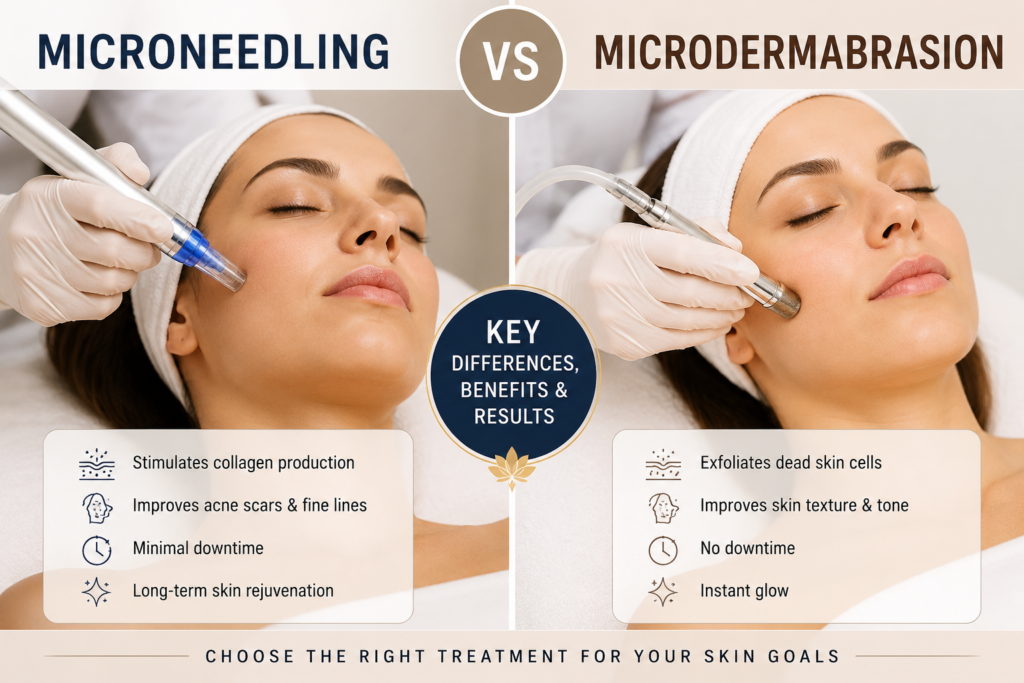
Microneedling vs Microdermabrasion is one of the most common comparisons people make when choosing a skin treatment for texture, dullness, fine lines, acne scars, and uneven tone. Both treatments can improve the appearance of the skin, but they work in very different ways and are not designed for the same depth of concern.
Microdermabrasion is mainly a surface exfoliation treatment. It removes dead skin cells from the outer layer of the skin to create a smoother, brighter look. Microneedling works deeper by creating tiny controlled channels in the skin, which encourages the natural repair process and supports new collagen production.
Choosing between the two depends on your skin goals, sensitivity, downtime preference, and the type of result you want. If your main concern is dull skin or light roughness, microdermabrasion may be enough. If your concern is acne scarring, deeper texture, enlarged pores, or collagen support, microneedling is usually the stronger option.
What Is Microneedling?
Microneedling is a skin treatment that uses very fine needles to create controlled micro channels in the skin. These tiny channels trigger the skin’s natural healing response. As the skin repairs itself, it can produce new collagen and elastin, which are important for firmness, texture, and smoother looking skin.
This is why microneedling is often called collagen induction therapy. It does not simply polish the surface of the skin. It works below the surface, which makes it useful for concerns such as acne scars, fine lines, enlarged pores, uneven texture, and mild skin laxity.
Professional microneedling is usually done in a controlled spa or clinical setting. The skin is cleansed first, and a numbing cream may be used depending on the treatment depth. After treatment, the skin may look pink or red for a short period, similar to a mild sunburn.
What Is Microdermabrasion?
Microdermabrasion is a non-invasive exfoliation treatment that removes the outermost layer of dead skin cells. It is usually performed with a diamond tip device or fine crystals that gently resurface the skin. The goal is to make the skin look smoother, brighter, and more refreshed.
Unlike microneedling, microdermabrasion does not create controlled channels in the skin. It mainly works on the surface. This makes it a good option for dullness, mild congestion, light texture, and uneven surface tone.
Microdermabrasion usually has very little downtime. Many people return to normal activities immediately after treatment. The skin may look slightly pink, but this usually settles quickly.
Microneedling vs Microdermabrasion: Main Differences
The biggest difference is treatment depth. Microdermabrasion works on the outer skin layer, while microneedling reaches deeper into the skin to stimulate repair. This depth difference affects the type of concerns each treatment can improve.
Microneedling is better suited for deeper concerns such as acne scars, fine lines, uneven texture, and collagen support. Microdermabrasion is better for surface level concerns such as dullness, dry patches, light roughness, and mild congestion.
| Comparison Point | Microneedling | Microdermabrasion |
| Main action | Creates controlled micro channels | Exfoliates the outer skin layer |
| Treatment depth | Deeper skin stimulation | Surface level resurfacing |
| Best for | Acne scars, texture, pores, fine lines | Dullness, mild roughness, surface buildup |
| Collagen support | Stronger collagen response | Limited collagen effect |
| Downtime | Usually 1 to 3 days of redness | Usually minimal |
| Comfort level | Mild to moderate discomfort | Mild scratching or suction feeling |
| Results timeline | Gradual results over weeks | Immediate smoother feel |
| Typical sessions | Often 3 to 6 sessions | Often 4 to 8 sessions |
Which Treatment Gives Better Results?
The better treatment depends on what you want to improve. If you want a quick glow before an event, microdermabrasion may be the better choice. It can make the skin feel smoother and look fresher after one session.
If you want longer term improvement in acne scars, enlarged pores, fine lines, and uneven texture, microneedling is usually more effective. This is because it works with the skin’s repair process rather than only removing surface buildup.
Research on microneedling has shown its use for atrophic acne scars, especially because the treatment supports a wound healing response in the skin. Microdermabrasion also has evidence for improving surface texture and discolouration, but it is generally more limited for deeper scars.
Benefits of Microneedling
Microneedling is popular because it targets deeper skin concerns without removing the entire outer layer of skin. It encourages the body’s own healing process, which makes results gradual and natural looking.
Common benefits include smoother skin texture, improved appearance of acne scars, reduced look of fine lines, improved firmness, smaller looking pores, and more even skin tone. It can also help improve the way the skin looks and feels over time.
At World of Beauty Miami, our Microneedling Treatment helps clients improve the look of uneven texture, acne marks, fine lines, and overall skin renewal.
Benefits of Microdermabrasion
Microdermabrasion is useful for people who want a gentle surface refresh. It can help remove dead skin cells, soften roughness, and brighten dull looking skin. It may also help skincare products apply more smoothly because the surface buildup has been reduced.
This treatment can be a good option for people with mild texture concerns or clogged pores. It is often chosen before events because it usually has little downtime and can leave the skin feeling cleaner and softer.
Microdermabrasion is not the strongest option for deeper acne scars or collagen rebuilding. It is more of a surface improvement treatment than a deeper skin remodelling treatment.
Treatment Depth and Skin Concerns
Treatment depth is the reason these two services produce different results. The skin has multiple layers, and not every concern sits in the same place. Dead skin buildup sits closer to the surface, while acne scars and collagen loss involve deeper skin structures.
Microdermabrasion can improve surface roughness because it works on the outer layer. Microneedling can reach deeper, which is why it is often chosen for scars, pores, and texture concerns that are not only surface level.
| Skin Concern | Better Option | Why |
| Dull skin | Microdermabrasion | Removes dead surface cells |
| Mild roughness | Microdermabrasion | Smooths the outer layer |
| Acne scars | Microneedling | Works deeper in the skin |
| Enlarged pores | Microneedling | Supports texture refinement |
| Fine lines | Microneedling | Encourages collagen support |
| Uneven tone | Both may help | Depends on cause and depth |
| Event glow | Microdermabrasion | Faster surface refresh |
| Long term texture improvement | Microneedling | Gradual collagen based results |
Downtime and Recovery
Microdermabrasion usually has less downtime. The skin may look slightly pink, but most people can return to regular activities soon after treatment. It is important to use sunscreen and avoid harsh products for a short period.
Microneedling usually has more visible recovery. Redness, warmth, tightness, and mild sensitivity can happen after treatment. This often settles within a few days, depending on skin sensitivity and treatment depth.
Neither treatment should be followed by aggressive skincare too soon. Retinoids, strong acids, exfoliants, and direct sun exposure should usually be avoided for a short recovery period. Your provider should give aftercare based on your skin and treatment plan.
Pain and Comfort Level
Microdermabrasion is usually comfortable. Most people describe it as a scratching, polishing, or suction feeling. It should not feel deeply painful when performed correctly.
Microneedling can feel more intense because it reaches deeper. A numbing cream may be used to make the treatment more comfortable. The feeling can vary depending on the device, needle depth, treatment area, and personal sensitivity.
Comfort should never be ignored. If your skin is very sensitive, inflamed, sunburned, or recently treated with strong skincare, your provider may recommend waiting before doing either treatment.
Who Is a Good Candidate for Microneedling?
Microneedling may be suitable for people who want to improve acne scars, uneven texture, enlarged pores, fine lines, and dull skin. It may also be suitable for people who want gradual improvement rather than only a quick surface polish.
It is not ideal for everyone. People with active acne flare ups, open wounds, certain skin infections, uncontrolled skin conditions, or a history of poor wound healing may need to avoid or delay treatment. A consultation is important before treatment.
Microneedling should be performed with proper hygiene and professional technique. Poor technique or unsafe tools can increase the risk of irritation, infection, scarring, or uneven results.
Who Is a Good Candidate for Microdermabrasion?
Microdermabrasion may be suitable for people with dull skin, mild roughness, dry surface buildup, or light congestion. It can also be useful for people who want a freshened look with minimal recovery time.
It may not be suitable for very sensitive skin, active rosacea, inflamed acne, broken capillaries, sunburn, or irritated skin. Because it exfoliates the surface, it can make some sensitive conditions worse if performed at the wrong time.
If you are unsure whether your skin needs exfoliation, hydration, calming care, or deeper rejuvenation, a professional Facial Service in Miami may be a better starting point.
Results Timeline
Microdermabrasion can give an immediate smoother feel because it removes surface buildup. The skin may look brighter after one session, but results are usually temporary unless treatments are repeated and supported with good skincare.
Microneedling results develop more gradually. Some people notice a fresher look after the skin calms down, but collagen related changes take longer. Visible improvement often builds over several weeks and may require multiple sessions.
| Timeline | Microneedling | Microdermabrasion |
| Same day | Redness and sensitivity are common | Skin may feel smoother |
| 1 to 3 days | Redness usually calms | Mild pinkness usually settles |
| 1 to 2 weeks | Skin may look fresher | Glow may continue with skincare |
| 4 to 6 weeks | Collagen related changes may begin to show | Surface benefits may fade |
| Multiple sessions | Better for scars and texture | Better for maintenance and glow |
Can You Combine Both Treatments?
Some people may benefit from both treatments, but they should not usually be done aggressively at the same time. The skin barrier needs time to recover. Doing too much at once can increase irritation and sensitivity.
A provider may recommend alternating treatments based on your skin goals. For example, microdermabrasion may be used for surface maintenance, while microneedling may be scheduled separately for deeper texture and collagen support.
The right sequence depends on your skin condition. If your barrier is weak, dry, or irritated, it may be better to repair and hydrate the skin first before any resurfacing treatment.
Which One Is Better for Acne Scars?
Microneedling is usually the better option for acne scars, especially depressed or textural scars. This is because acne scars often involve deeper changes in the skin. Surface exfoliation alone usually cannot remodel scar tissue.
Microdermabrasion may help with mild surface texture and post breakout dullness, but it is not usually strong enough for deeper acne scarring. It can make the surface feel smoother, but it does not target the deeper scar structure in the same way.
For more advanced scarring, a combination plan may be needed. This may include microneedling, chemical exfoliation, professional skincare, or other treatments depending on the scar type.
Which One Is Better for Fine Lines?
Microneedling is usually stronger for fine lines because it supports collagen production. Fine lines often appear when skin loses firmness, elasticity, and structure over time. A deeper treatment can be more useful for this type of concern.
Microdermabrasion can soften the look of very fine surface lines temporarily by smoothing the outer layer. It can improve skin brightness, but it does not create the same collagen response as microneedling.
If fine lines are your main concern, microneedling may offer more noticeable long term improvement when done in a proper series.
Safety and Aftercare
Both treatments are generally considered safe when performed properly on suitable skin. The main risks come from poor technique, poor hygiene, wrong treatment timing, or ignoring aftercare.
After microdermabrasion, use gentle cleanser, moisturiser, and sunscreen. Avoid strong exfoliants for a short period. After microneedling, follow your provider’s instructions carefully because the skin is more open and sensitive.
Sun protection is important after both treatments. Freshly treated skin can be more sensitive to sunlight, and unprotected exposure can increase the risk of irritation or uneven pigmentation.
Choosing the Right Treatment
Choose microdermabrasion if your goal is a cleaner, smoother, brighter surface with minimal downtime. It is a good option for maintenance, dullness, and light roughness.
Choose microneedling if your goal is deeper texture improvement, acne scar refinement, fine line softening, and collagen support. It is better suited for people who want progressive results over a series of treatments.
If you are still unsure, start with a consultation. Your provider can look at your skin, discuss your goals, and recommend whether microneedling, microdermabrasion, a facial, or another service is the better fit.
Final Thoughts
Microneedling vs Microdermabrasion comes down to depth, goals, and expected results. Microdermabrasion is a surface exfoliation treatment that can refresh dull skin and smooth mild roughness. Microneedling works deeper and is usually better for acne scars, fine lines, enlarged pores, and collagen support.
Both treatments can be useful, but they are not interchangeable. The best choice depends on your skin type, current condition, downtime preference, and long term goals.
If you want help choosing the right treatment, visit our contact page and schedule a consultation with World of Beauty Miami.
FAQs
Is microneedling better than microdermabrasion?
Microneedling is usually better for deeper concerns such as acne scars, fine lines, enlarged pores, and uneven texture. Microdermabrasion is better for surface dullness, mild roughness, and a quick smoother look.
Which treatment has less downtime?
Microdermabrasion usually has less downtime. Most people only experience mild pinkness. Microneedling can cause redness, warmth, tightness, and sensitivity for a few days depending on treatment depth.
Can microdermabrasion remove acne scars?
Microdermabrasion may improve mild surface texture, but it is not usually strong enough for deeper acne scars. Microneedling is generally more suitable for acne scar improvement because it works deeper in the skin.
How many microneedling sessions do you need?
Many people need a series of treatments, often around 3 to 6 sessions, depending on skin goals, scar depth, and treatment response. Your provider can recommend a plan after assessing your skin.
Can I get microneedling and microdermabrasion together?
They are not usually performed aggressively at the same time because the skin needs time to recover. Some people may benefit from alternating treatments, but this should be planned by a professional.
