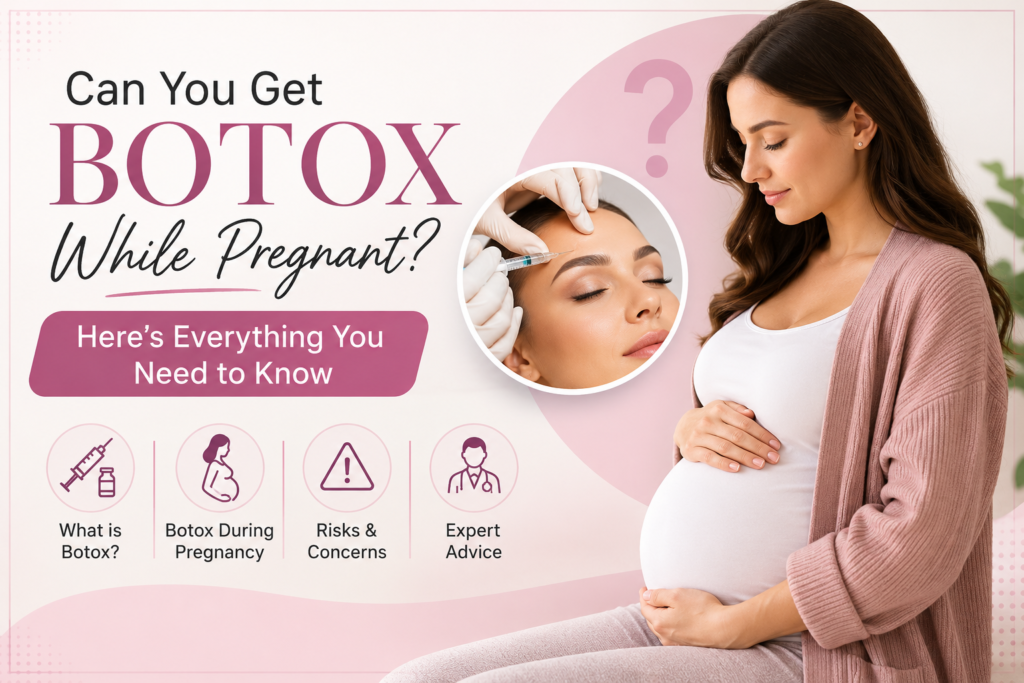
If you are asking “can you get botox while pregnant,” the safest answer is that cosmetic Botox is generally not recommended during pregnancy unless your medical provider says there is a clear medical reason. Pregnancy is a time when providers usually avoid elective treatments because safety data is limited.
Botox is a prescription injectable made from onabotulinumtoxinA. It is commonly used to soften expression lines caused by repeated facial movement, including forehead lines, frown lines, and crow’s feet.
At World of Beauty Miami, clients can explore professional Botox and Dysport treatments when it is appropriate for their health, timing, and aesthetic goals.
What Botox Does
Botox works by temporarily relaxing targeted muscles. When the muscle movement is reduced, the lines caused by that movement can look softer.
This is why Botox is commonly used for dynamic wrinkles. These are lines that appear or deepen when you smile, frown, squint, or raise your eyebrows.
The result is not immediate. Many people start to notice changes within a few days, with full results usually developing within about two weeks.
Why Pregnancy Changes the Decision
Pregnancy changes how providers think about elective cosmetic care. Even if a treatment is commonly performed outside pregnancy, that does not automatically mean it should be done while pregnant.
The main issue is limited human safety data. Botox has not been studied in pregnant people in the same way many approved pregnancy medications have been studied.
Because of that, most aesthetic providers avoid cosmetic Botox during pregnancy. The benefit of smoothing wrinkles is usually not considered important enough to justify uncertain risk.
Is Botox Proven to Harm Pregnancy?
There is no strong human evidence proving that cosmetic Botox causes birth defects when used before someone knows they are pregnant. However, that is not the same as proving it is safe.
Some available reports and reviews have not shown an increased risk of birth defects with onabotulinumtoxinA exposure, but the data is still limited.
This is why the common medical approach is caution. If the treatment is not medically necessary, it is usually postponed.
Botox During Pregnancy at a Glance
| Question | General Answer |
| Can you get cosmetic Botox while pregnant? | Usually not recommended |
| Is Botox fully proven safe in pregnancy? | No, safety data is limited |
| What if Botox was done before pregnancy was known? | Speak with your doctor, but accidental exposure is usually handled with medical guidance |
| Should you hide pregnancy from an injector? | No, always disclose it |
| Can medical Botox be considered during pregnancy? | Only with a qualified medical provider weighing risks and benefits |
| When can cosmetic Botox be discussed again? | After pregnancy, and with medical guidance if breastfeeding |
This table is general information only. Your doctor or obstetric provider should guide any personal decision during pregnancy.
Cosmetic Botox Versus Medical Botox
There is an important difference between cosmetic Botox and medical Botox.
Cosmetic Botox is used for appearance goals, such as softening forehead lines or frown lines. Medical Botox may be used for certain health conditions, such as chronic migraine, muscle spasm, excessive sweating, or other approved concerns.
During pregnancy, medical treatment decisions may involve a different risk benefit discussion. A doctor may consider the mother’s health, symptoms, alternatives, and available evidence.
Aesthetic clinics should not treat pregnancy as a casual exception. Cosmetic Botox can usually wait.
Why Most Providers Say to Wait
Most professionals recommend waiting because pregnancy is temporary, while Botox results are also temporary. Since Botox usually lasts for a few months, delaying treatment is often the simplest and safest choice.
Another reason to wait is that pregnancy can affect the face and skin. Fluid retention, hormonal changes, increased sensitivity, acne, melasma, and skin texture changes can all affect how your face looks and reacts.
Because your skin and body are changing, cosmetic timing may not be ideal. A treatment plan after pregnancy can be more accurate and better suited to your current face.
What If You Had Botox Before Knowing You Were Pregnant?
This situation happens. Many people receive Botox before they realise they are pregnant.
If this happens, do not panic. Contact your obstetric provider and tell them when you had the treatment, the dose if you know it, the area treated, and whether you have any symptoms.
Your provider can give guidance based on your pregnancy stage, medical history, and exposure details.
Do not schedule additional cosmetic Botox after finding out you are pregnant unless a medical doctor specifically recommends treatment for a medical condition.
Should You Tell Your Injector You Are Pregnant?
Yes. Always tell your injector if you are pregnant, trying to conceive, or breastfeeding.
A responsible provider needs this information before treatment. It helps them make a safe decision and avoid performing a treatment that should be delayed.
If a clinic does not ask about pregnancy, medical history, medications, allergies, and health conditions before Botox, that is a serious warning sign.
Can You Get Dysport While Pregnant?
Dysport is another botulinum toxin injectable used for similar cosmetic goals. Like Botox, it is generally avoided for cosmetic use during pregnancy because of limited safety data.
The same cautious thinking applies. If the treatment is elective, it is better to wait until pregnancy is over and your provider says treatment is appropriate.
World of Beauty Miami offers Botox and Dysport services, but timing and suitability should always come first.
What About Fillers During Pregnancy?
Dermal fillers are also usually avoided during pregnancy for cosmetic purposes. Fillers are different from Botox because they add volume rather than relaxing muscle movement.
Pregnancy can cause facial swelling and fluid changes. That can make filler planning less predictable.
If you are thinking about facial balancing, lips, cheeks, or other volume based treatments, it is better to wait until after pregnancy and medical clearance.
You can learn more about aesthetic options on the fillers service page when the timing is right.
Safer Skin Care Options During Pregnancy
Pregnancy does not mean you have to ignore your skin. It means you need to choose treatments more carefully.
Gentle facials, hydration focused skin care, sunscreen, mild cleansing, and pregnancy suitable moisturisers may help keep skin comfortable and fresh.
Some ingredients and treatments should be avoided during pregnancy, including certain retinoids and stronger procedures. Always check with your doctor before starting new products or treatments.
For non injectable care, you can explore professional facial services in Miami and ask which options may be appropriate for your situation.
Pregnancy Skin Changes That Affect Your Routine
Pregnancy hormones can change the skin in several ways. Some people notice a glow, while others deal with breakouts, dryness, sensitivity, or pigmentation.
Melasma, sometimes called pregnancy mask, can appear as brown or grey brown patches on the face. Sun protection is especially important because UV exposure can make pigmentation look darker.
Skin may also become more reactive. Products that worked well before pregnancy may suddenly feel irritating.
This is why gentle care is usually better than aggressive treatment during pregnancy.
What to Avoid Without Medical Guidance
Avoid cosmetic injectables during pregnancy unless your medical provider gives specific guidance.
Avoid strong peels, aggressive resurfacing, and treatments that create unnecessary irritation. Also be careful with new active ingredients, especially if you are unsure whether they are pregnancy suitable.
Do not rely on advice from social media or beauty trends when pregnant. Pregnancy care should be guided by qualified medical professionals.
Aesthetic treatments can wait. Pregnancy safety should not be treated as a guessing game.
Botox and Breastfeeding
Breastfeeding brings another common question. It is not fully known whether onabotulinumtoxinA passes into breast milk in a way that could affect a baby.
Some sources suggest that because Botox is not expected to move much through the bloodstream after proper injection, transfer into milk may be unlikely. Still, data is limited.
If you are breastfeeding and considering Botox, speak with your obstetric provider, pediatrician, or qualified medical provider before booking treatment.
When Can You Restart Botox After Pregnancy?
The right time to restart Botox depends on your recovery, health, breastfeeding status, and medical guidance.
Some people wait until after delivery. Others wait until after breastfeeding. Some may be cleared earlier by their provider depending on their circumstances.
The safest step is to have a consultation after pregnancy. Your injector can reassess your facial movement, skin changes, goals, and treatment areas.
Your face may not be exactly the same as before pregnancy, so your treatment plan may need adjustment.
Questions to Ask Before Booking Botox After Pregnancy
- Ask whether you are a suitable candidate based on your current health.
- Ask how long you should wait after delivery or breastfeeding. Ask what dose is recommended, what areas will be treated, and what aftercare you should follow.
- Also ask about side effects, expected results, and when to return for a review.
A professional consultation should not feel rushed. You should understand the treatment before any injection is performed.
When to Contact World of Beauty Miami
If you are pregnant, it is best to wait before booking cosmetic Botox. If you are planning ahead for after pregnancy, you can still ask questions and learn about treatment options.
World of Beauty Miami can help you understand Botox, Dysport, fillers, facials, and other aesthetic services when the timing is appropriate.
To speak with the team or ask about future treatment planning, visit the contact page.
Final Thoughts
So, can you get Botox while pregnant? For cosmetic reasons, the safest and most common recommendation is to wait.
Botox has not been proven dangerous in every accidental exposure, but pregnancy safety data is limited. That is enough reason to avoid elective injections until after pregnancy and medical clearance.
If you already had Botox before knowing you were pregnant, contact your doctor for advice. If you are considering Botox while pregnant, do not book it without medical guidance. Your health and your baby’s safety come first.