
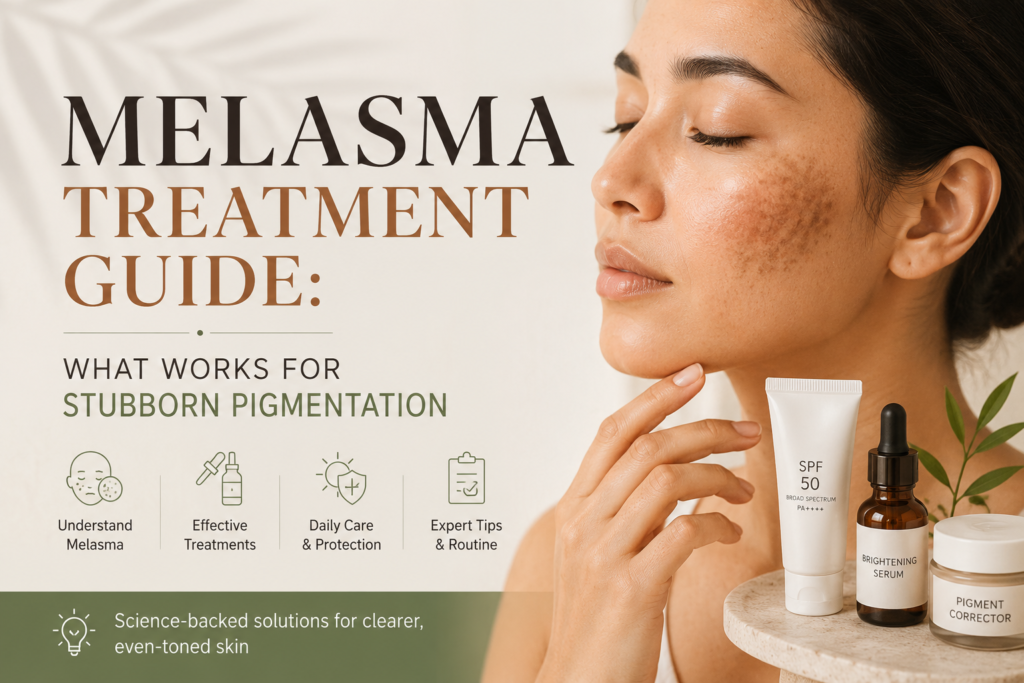
Melasma is one of the most challenging skin conditions to treat because it often returns even after visible improvement. If you are searching for an effective melasma treatment, understanding the causes, treatment options, and long term management strategies is essential.
This common pigmentation disorder causes brown, gray brown, or tan patches that usually appear on the cheeks, forehead, upper lip, nose, and chin. While melasma is not harmful, it can significantly affect confidence and quality of life.
The good news is that advances in dermatology and aesthetic medicine have made it possible to manage melasma more effectively than ever before. The key is combining professional treatments with proper skincare and sun protection.
What Is Melasma?
Melasma is a chronic skin pigmentation disorder caused by the overproduction of melanin. It affects millions of people worldwide and is particularly common among women and individuals with medium to darker skin tones.
The condition is often triggered by:
- Sun exposure
- Hormonal changes
- Pregnancy
- Birth control pills
- Hormone replacement therapy
- Genetics
- Heat exposure
- Certain medications
Melasma at a Glance
| Factor | Details |
| Most affected group | Women aged 20 to 50 |
| Female cases | Approximately 90% |
| Common locations | Cheeks, forehead, upper lip, chin |
| Main trigger | Ultraviolet radiation |
| Recurrence rate | High without maintenance care |
According to research published in the Journal of Clinical and Aesthetic Dermatology, melasma affects approximately 1% of the general population and up to 50% of higher risk populations in regions with intense sun exposure.
Why Is Melasma So Difficult to Treat?
Unlike temporary hyperpigmentation, melasma develops deeper within the skin and is influenced by multiple biological pathways. Sunlight, visible light, hormones, and inflammation can all stimulate melanocytes to produce excess pigment.
This means that even after successful treatment, pigmentation can return if underlying triggers are not managed.
Experts often describe melasma management as a long term commitment rather than a one time correction.
The Most Effective Melasma Treatment Options
Successful treatment typically requires a customized combination approach.
1. Prescription Topical Treatments
Topical medications remain the first line of defense against melasma.
Hydroquinone
Hydroquinone is considered the gold standard for reducing excess pigmentation. It works by inhibiting melanin production.
Benefits include:
- Lightens dark patches
- Improves overall skin tone
- Often produces visible results within 8 to 12 weeks
Triple Combination Cream
This prescription treatment combines:
- Hydroquinone
- Tretinoin
- A corticosteroid
Many dermatologists consider this one of the most effective medical therapies for moderate to severe melasma.
2. Chemical Peels
Professional chemical peels can help accelerate pigment removal and improve skin texture.
Common peel ingredients include:
- Glycolic acid
- Salicylic acid
- Lactic acid
- Jessner solution
Patients seeking skin rejuvenation often combine pigmentation management with professional treatments such as the facial services available at World of Beauty Miami through their facial care programs.
Comparison of Popular Chemical Peels
| Peel Type | Best For | Downtime |
| Glycolic Acid | Mild pigmentation | Minimal |
| Salicylic Acid | Oily and acne prone skin | 1 to 3 days |
| Lactic Acid | Sensitive skin | Minimal |
| Jessner Peel | Stubborn pigmentation | Several days |
For patients requiring deeper exfoliation, professional chemical peel treatments can support a comprehensive melasma management plan.
3. Microneedling for Melasma
Recent studies have shown promising results for microneedling when performed by trained professionals.
Microneedling creates controlled micro injuries that stimulate collagen production and improve the penetration of topical medications.
Potential benefits include:
- Improved skin texture
- Better treatment absorption
- Reduction in pigmentation irregularities
- Enhanced skin renewal
Many patients exploring advanced pigmentation correction also consider professional microneedling treatment as part of a personalized skincare strategy.
4. Tranexamic Acid
Tranexamic acid has emerged as one of the most exciting developments in melasma management.
It may be prescribed as:
- Oral medication
- Topical treatment
- Injectable therapy
Research suggests that tranexamic acid helps reduce pigment formation by targeting vascular and inflammatory pathways associated with melasma.
Clinical Outcomes of Common Treatments
| Treatment | Improvement Reported |
| Hydroquinone | 50% to 80% |
| Triple Combination Therapy | 60% to 90% |
| Tranexamic Acid | 40% to 80% |
| Chemical Peels | Variable depending on depth |
| Microneedling Combination Therapy | Improved outcomes when paired with topical treatment |
Results vary depending on skin type, melasma depth, treatment consistency, and lifestyle factors.
5. Laser Treatments: Are They Worth It?
Laser treatments can be effective for certain patients, but they require careful evaluation.
Not all lasers are suitable for melasma. Aggressive treatments can worsen pigmentation in some individuals.
Safer options may include:
- Low fluence laser treatments
- Fractional laser technology
- Specific pigment targeting devices
Because melasma behaves differently than other pigmentation disorders, laser treatment should only be performed by experienced providers familiar with melasma management.
The Most Important Part of Any Melasma Treatment Plan
Daily Sun Protection
No treatment can provide lasting results without diligent sun protection.
Studies consistently show that ultraviolet radiation and visible light are major triggers for recurrence.
Experts recommend:
- Broad spectrum SPF 30 or higher
- Reapplication every two hours outdoors
- Wide brim hats
- Sunglasses
- Seeking shade whenever possible
Sun Protection Checklist
| Recommendation | Importance |
| Broad spectrum sunscreen | Essential |
| SPF 30 or higher | Essential |
| Daily application | Essential |
| Protective clothing | Highly recommended |
| Shade during peak sun hours | Highly recommended |
Patients who maintain strict sun protection often experience significantly better long term outcomes.
Lifestyle Factors That Can Influence Melasma
Several lifestyle factors can affect treatment success:
Heat Exposure
Heat can stimulate melanocytes independently of ultraviolet radiation.
Common sources include:
- Hot yoga
- Steam rooms
- Saunas
- Prolonged outdoor activities
Hormonal Changes
Pregnancy and hormonal medications frequently contribute to melasma development.
Patients should discuss hormonal factors with their healthcare providers when evaluating treatment options.
Skincare Habits
Harsh products can trigger inflammation and worsen pigmentation.
Focus on:
- Gentle cleansing
- Consistent moisturization
- Antioxidant protection
- Barrier repair
How Long Does It Take to See Results?
Most patients begin noticing improvements within:
| Treatment Type | Typical Timeline |
| Hydroquinone | 8 to 12 weeks |
| Chemical Peels | Several sessions |
| Microneedling | 4 to 12 weeks |
| Tranexamic Acid | 8 to 16 weeks |
| Combination Therapy | 2 to 6 months |
Patience and consistency are critical. Melasma rarely improves overnight.
When to Seek Professional Help
If over the counter products are not producing results or pigmentation continues to worsen, professional evaluation is recommended.
An experienced provider can determine:
- Whether pigmentation is truly melasma
- The depth of pigmentation
- Contributing triggers
- The most appropriate treatment combination
Patients can learn more about the practice, expertise, and treatment philosophy through the World of Beauty Miami About Us page before scheduling a consultation.
Final Thoughts
Melasma remains one of the most complex pigmentation disorders in aesthetic medicine, but modern treatment options offer meaningful improvement for many patients. The most successful outcomes come from combining evidence based therapies, professional guidance, and diligent sun protection.
Whether treatment includes prescription topicals, chemical peels, microneedling, tranexamic acid, or a combination approach, consistency is the factor that makes the greatest difference. With realistic expectations and a personalized treatment plan, patients can significantly reduce stubborn pigmentation and maintain healthier, more even looking skin over time.