
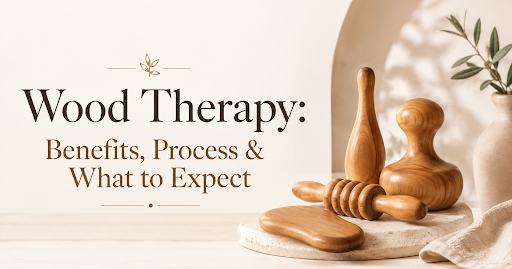
Wood Therapy: Benefit massage technique that uses specially shaped wooden tools to apply rhythmic pressure across areas such as the thighs, abdomen, hips, buttocks, arms, and back. Also called maderotherapy, it is commonly chosen by people who want smoother looking skin, a more defined appearance, or a massage focused body care experience.
Interest in the treatment has grown alongside noninvasive body contouring, but realistic expectations matter. Wood therapy is not a weight loss treatment, and current research does not show that it permanently removes fat or cellulite. Its value is better understood as a cosmetic massage approach that may temporarily improve the look and feel of treated areas.
What Is Wood Therapy?
Wood therapy uses rollers, cups, sculpted boards, and other wooden instruments designed to follow body contours. A practitioner moves the tools over the skin using repeated strokes, rolling movements, compression, and targeted pressure.
The technique is offered in aesthetic and wellness settings as a form of body massage. A professional Madera wood therapy in Miami session may be customized around the areas a client wants to address and the pressure they find comfortable.
Wood therapy should not be confused with medical treatment for lymphedema or other swelling disorders. Manual lymphatic drainage is a specific clinical massage method with its own evidence, indications, and limitations.
Why Is Wood Therapy Popular?
Many people seek wood therapy because cellulite, uneven texture, and localized fullness are common cosmetic concerns. Cellulite is not a disease and does not mean that a person is unhealthy.
A 2015 evidence review in the American Journal of Clinical Dermatology reported that cellulite is present in about 80 to 90 percent of postpubertal women. A 2023 review reported the same prevalence range and noted that the thighs, buttocks, and hips are among the most commonly affected areas.
This prevalence helps explain the demand for contour focused treatments. The key is to discuss possible benefits in terms of appearance and massage rather than promising a cure.
Wood Therapy Benefits: What Can It Realistically Do?
Smoother Looking Skin
Repeated massage pressure can temporarily change how soft tissue and fluid sit beneath the skin. After a session, some people may notice that treated areas look smoother or feel less tight.
Research reviews on cellulite treatments consistently note that many available methods produce variable results and that improvements can be short lived. Wood therapy should therefore be viewed as cosmetic care rather than a permanent cellulite solution.
A Refreshed Body Feel
Firm massage can create a sensation of warmth in the treated area. Some clients also enjoy the relaxation and sense of lightness that can follow a massage session.
That experience is different from claiming that wood tools remove toxins. The body already uses the liver, kidneys, lungs, digestive system, and lymphatic system to manage waste and fluid balance.
Temporary Support for Puffiness
Massage can influence superficial fluid movement, which may help explain why an area sometimes looks less puffy after treatment. This does not mean wood therapy treats lymphedema, vascular disease, or unexplained swelling.
A 2021 systematic review of manual lymphatic drainage included 17 studies with 869 participants, mostly people with breast cancer related lymphedema. Findings were mixed, so this research should not be used as proof that cosmetic wood therapy medically improves lymphatic function.
A Contour Focused Massage Experience
Wooden tools give practitioners several shapes for broad rolling, targeted compression, and work around curved body areas. This can make treatment feel more structured than a traditional relaxation massage.
The result may be a temporarily more defined or smoother appearance. It should not be equated with permanent fat loss or used as a substitute for nutrition, exercise, or medical care.
Key Research Numbers to Know
These figures separate established facts from marketing claims. There is strong evidence that cellulite is common, but not comparable evidence that wood therapy permanently eliminates cellulite or body fat.
How Does a Wood Therapy Session Work?
A session usually begins with a consultation. The practitioner asks about goals, treatment areas, pressure preference, recent procedures, medications, pregnancy status, skin problems, and health concerns that could affect massage safety.
The treatment area is prepared so the tools can glide comfortably. Depending on the provider, a massage oil or lotion may be used to reduce friction.
The practitioner then selects tools according to the area and desired massage pattern. Rollers may cover larger surfaces, while contoured tools can follow areas such as the waist, thighs, hips, or buttocks.
Pressure should feel firm but tolerable. More force is not automatically more effective, and pain is not a requirement for a useful session.
What Do the Wooden Tools Actually Do?
Different tools create different types of mechanical pressure. A roller spreads pressure across a wider area, while a curved board or cup can follow a specific body contour.
Mechanically, these tools compress and move soft tissue at the surface. They do not physically melt fat, destroy fat cells, or permanently break apart the fibrous structures associated with cellulite.
Cellulite involves skin, subcutaneous fat, connective tissue septa, and other biological factors. Massage may change surface appearance without permanently remodeling those structures.
What Does Wood Therapy Feel Like?
Most people describe the treatment as firm massage with repeated rolling or pressing sensations. Some areas may be more sensitive, particularly the inner thighs, abdomen, or areas that already feel tender.
You should be able to communicate about pressure throughout the session. Sharp pain, intense burning, numbness, or major discomfort are reasons to reduce pressure or stop work on the area.
Mild temporary redness can occur after massage. Significant bruising, persistent pain, marked swelling, or skin injury should not be treated as a normal goal.
Which Areas Are Commonly Treated?
Wood therapy is often used on the thighs, hips, buttocks, abdomen, waist, arms, and back. The best area depends on goals, tissue sensitivity, and whether there is any medical reason to avoid massage.
Providers may also incorporate it into broader customized body contouring programs when a client wants a plan that considers several body areas or more than one cosmetic method.
A personalized approach makes sense because body composition, skin texture, sensitivity, and expectations vary from person to person.
How Many Sessions Are Needed?
There is no scientifically established universal number of wood therapy sessions. Recommendations vary by provider, treatment goals, pressure tolerance, and how long visible changes last.
A responsible provider should avoid guaranteeing a specific number of inches lost or a permanent cellulite result. Standardized photos can be useful when assessing cosmetic changes over time.
Wood Therapy Compared With Other Body Contouring Options
Wood therapy is manual, while other body contouring services may use energy based devices. Each approach has its own mechanism, sensations, evidence base, and safety considerations.
Clients considering device based options can review ultrasonic cavitation treatment separately rather than assuming it works like wood therapy. A consultation should clarify which approach best matches the desired outcome.
What Should You Do Before an Appointment?
Arrive with clean skin and avoid products that leave the area irritated. Tell the practitioner about recent surgery, injections, cosmetic procedures, injuries, rashes, infections, unexplained swelling, or new pain.
Also disclose medications and conditions that can affect bruising, circulation, sensation, or healing. This helps the provider decide whether treatment should proceed, be modified, or be postponed.
Normal hydration supports general wellbeing, but drinking excessive water does not make wood therapy remove fat or toxins.
What Should You Expect After Wood Therapy?
Immediately afterward, the skin may look mildly flushed and the area may feel warm or worked. Some people report a lighter or smoother feeling, while others notice little visible difference after one visit.
Follow reasonable provider instructions and avoid treating soreness as proof that the session worked. Significant bruising, increasing pain, unusual swelling, numbness, or skin damage should prompt appropriate medical advice.
Who Should Be Cautious About Wood Therapy?
Massage is generally considered low risk when performed appropriately, but rare serious adverse events have been reported. Some people may need medical guidance before receiving firm bodywork.
Extra caution is appropriate with suspected or known blood clots, active skin infection, open wounds, recent surgery, significant bruising disorders, fractures, severe osteoporosis, or areas with reduced sensation. Pregnancy may also change which areas and pressure levels are suitable.
People with diagnosed lymphedema, persistent unexplained swelling, cardiovascular disease, cancer related swelling, or vascular concerns should not use cosmetic wood therapy as a substitute for medical assessment.
Does Wood Therapy Get Rid of Cellulite?
It is more accurate to say that wood therapy may temporarily improve the appearance of skin texture in some people. Current evidence does not establish that it permanently removes cellulite.
Cellulite forms through several interacting anatomical and biological factors. Massage pressure may change the surface appearance for a period of time, but that differs from permanently altering the connective tissue structures involved in dimpling.
Does Wood Therapy Help With Weight Loss?
No reliable evidence shows that wood therapy produces meaningful weight loss. Body weight changes through energy balance and other physiological factors, not because a wooden roller mechanically removes body fat.
A temporary change in measurements can reflect fluid shifts, posture, compression, or measurement technique. It should not be presented as the same as losing fat tissue.
How to Choose a Wood Therapy Provider
Choose a provider who screens for health concerns, explains realistic outcomes, uses clean equipment, adjusts pressure to your comfort, and does not guarantee permanent fat loss.
A good consultation should cover your goals, medical history, recent procedures, sensitive areas, expected sensations, likely limitations, and what to do if you experience an unusual reaction.
Before and after images can help, but lighting, posture, camera distance, clothing, and timing can all change how body contours look in photographs.
Final Thoughts
Wood therapy can appeal to people who enjoy firm massage and want a noninvasive, contour focused body care experience. It may help skin look temporarily smoother and can provide the physical comfort associated with massage.
The most important expectation is realism. Wood therapy does not have strong evidence for permanent fat removal, weight loss, or lasting elimination of cellulite. Results vary and should be evaluated over time.
When performed by a careful practitioner who screens for safety and communicates clearly, maderotherapy can fit into a cosmetic body care routine. The best experience comes from knowing what the technique can reasonably do and how it differs from medical care or other body contouring methods.