
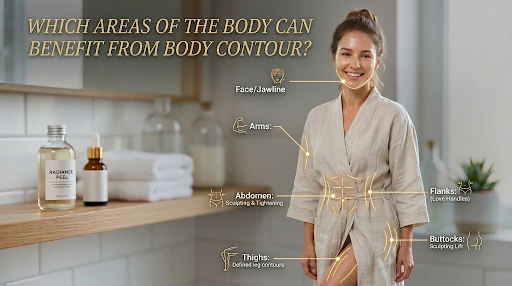
Body contouring can benefit several areas of the body, especially the abdomen, flanks, thighs, arms, buttocks, back, chin, and neck. These treatments are designed to refine localized fat, improve body proportions, and support a more balanced silhouette rather than treat obesity or replace weight loss.
Many people consider body contouring when diet and exercise have not changed a particular stubborn area. Noninvasive options may target small pockets of fat, while surgical procedures can address excess skin and weakened tissue after major weight changes or pregnancy.
For a treatment plan that fits your goals, a consultation with a qualified provider is essential. You can explore customized body contouring programs to understand which approach may suit your body and lifestyle.
What Body Contouring Means
Body contouring refers to treatments that change the shape or appearance of specific areas of the body. Some methods reduce localized fat, some tighten skin, and others improve the appearance of cellulite or support body proportions.
These treatments are not weight loss procedures. The FDA clearly states that noninvasive body contouring does not treat obesity or improve health, so candidates should have realistic expectations about what the treatment can achieve.
A good plan begins with an assessment of your overall health, body composition, skin quality, and the specific area you want to improve. This helps determine whether a noninvasive treatment, a surgical procedure, or a combination approach is appropriate.
Areas That Can Benefit
Different body areas respond differently depending on the amount of fat, skin laxity, muscle tone, and the treatment method used. The following areas are among the most commonly discussed in body contouring plans.
| Body area | Common concern | Possible contouring approach | Important consideration |
| Abdomen | Localized fat, loose skin, post pregnancy changes | Noninvasive fat reduction, liposuction, abdominoplasty | Excess skin or muscle separation may need surgical evaluation. |
| Flanks | Fat around the sides of the waist | Noninvasive fat reduction or liposuction | Often treated alongside the abdomen for balance. |
| Thighs | Inner or outer thigh fullness | Noninvasive fat reduction, liposuction, skin tightening | Skin laxity may limit the result of fat reduction alone. |
| Upper arms | Fullness or loose skin | Noninvasive fat reduction or surgical contouring | Loose skin may require a different approach than fat alone. |
| Buttocks | Shape, volume, or contour balance | Buttock enhancement or contouring procedures | Goals should be discussed with a qualified provider. |
| Back | Bra line fullness or upper back fat | Noninvasive fat reduction or liposuction | Treatment areas must be mapped carefully. |
| Chin and neck | Submental fullness | Cryolipolysis or other targeted fat reduction | FDA cleared options may apply to the submental area. |
| Chest in men | Localized chest fullness | Medical assessment and individualized treatment | Underlying causes should be evaluated before treatment. |
Abdomen and Waistline
The abdomen is one of the most requested areas for body contouring. People often seek treatment for lower abdominal fullness, a post pregnancy change in shape, or fat that remains despite consistent exercise.
Noninvasive treatments may be suitable for people with small, pinchable areas of fat and good skin elasticity. Cryolipolysis, also known as fat freezing, is FDA cleared for the abdomen and flanks in people with a body mass index of 30 or less.
When there is significant loose skin, weakened abdominal muscles, or major weight loss, a tummy tuck may be more appropriate. An abdominoplasty removes excess skin and can tighten weakened abdominal muscles to create a firmer and flatter midsection.
Flanks and Love Handles
The flanks, often called love handles, are the areas along the sides of the waist. Fat in this region can be resistant to exercise because it is influenced by genetics, hormones, age, and overall body fat distribution.
Cryolipolysis is FDA cleared for the flank area in eligible candidates. It uses controlled cooling to reduce visible fat bulges without surgery.
Treating the abdomen and flanks together can create a more balanced waistline. However, the provider should assess whether the concern is primarily fat, loose skin, posture, or a combination of factors before recommending treatment.
Thighs and Legs
The thighs can benefit from contouring when localized fat creates fullness on the inner or outer thighs. Some people also want to improve rubbing, chafing, or the appearance of uneven contours.
Noninvasive fat reduction may help with selected areas of localized fat. Cryolipolysis is FDA cleared for the thighs, and treatment planning should consider skin elasticity and the amount of fat present.
If the main issue is loose skin rather than fat, fat reduction alone may not create the desired result. A provider may recommend a different approach or explain the limitations of nonsurgical options.
Arms and Upper Body
The upper arms can develop fullness due to age, genetics, or weight changes. Some people notice this area even when they are otherwise at a stable weight.
Cryolipolysis is FDA cleared for the upper arms in appropriate candidates. It may be considered for small pockets of fat, but significant skin laxity can reduce the visible improvement from fat reduction alone.
The back is another area that may benefit from contouring. FDA cleared cryolipolysis indications include the upper and lower back, making it a possible option for bra line fullness or upper back fat in suitable candidates.
Buttocks and Hips
The buttocks and hips influence the overall balance of the lower body. Some people want more projection, while others want a smoother transition between the waist, hips, and thighs.
A Colombian butt lift is one approach that focuses on enhancing the shape and proportions of the buttocks. You can learn more about Colombian butt lift services and discuss whether this treatment aligns with your goals.
Body contouring in this area should always be individualized. The provider should evaluate fat distribution, skin quality, muscle tone, and the desired proportion before recommending a treatment plan.
Chin and Neck
The area beneath the chin, called the submental area, can hold stubborn fat that creates the appearance of a double chin. This concern can occur at any age and may be influenced by genetics and fat distribution.
Cryolipolysis has been studied for submental fat reduction. A clinical evaluation of 60 patients found that a small volume cryolipolysis applicator reduced submental fat safely and effectively.
The FDA has cleared a cryolipolysis system for cold assisted lipolysis of the submental area, thigh, abdomen, and flanks in people with a body mass index of 30 or less.
Body Contouring by the Numbers
Interest in body contouring remains strong. In 2023, the American Society of Plastic Surgeons reported that liposuction was the most performed cosmetic surgical procedure in the United States, with 347,782 procedures.
Tummy tuck surgery was also common, with 170,110 procedures performed in 2023. These figures show that many people seek professional help for abdominal shape, skin laxity, and body proportions.
| Procedure or category | 2023 volume | What it indicates |
| Liposuction | 347,782 procedures | Strong demand for surgical fat contouring. |
| Abdominoplasty | 170,110 procedures | Many patients seek treatment for abdominal skin and muscle concerns. |
| Cosmetic surgical procedures | 1,575,244 procedures | Body procedures are part of a broader surgical market. |
| Minimally invasive procedures | 25,442,640 procedures | Noninvasive options remain a major part of aesthetic care. |
These numbers do not mean every person needs surgery. They highlight the importance of matching the treatment to the actual concern, whether that concern is fat, skin, muscle support, or overall proportion.
Noninvasive Versus Surgical Options
Noninvasive body contouring uses technologies such as cold, radiofrequency energy, ultrasound, pulsed magnetic fields, and massage or vibration. Some devices are intended to reduce small amounts of fat, while others focus on the appearance of cellulite.
Surgical options, including liposuction and abdominoplasty, can address larger volumes of fat or excess skin. They involve more recovery time and carry surgical risks, so they require a thorough medical assessment.
| Feature | Noninvasive contouring | Surgical contouring |
| Main purpose | Small areas of localized fat or cellulite appearance | Larger fat volumes, excess skin, or muscle repair. |
| Recovery | Usually less downtime | More recovery time and aftercare. |
| Results | Gradual and often modest | Can be more noticeable and durable. |
| Best suited for | Stable weight and mild localized concerns | Significant skin laxity or major body changes. |
| Risks | Temporary effects and rare complications | Surgical risks and longer healing. |
Safety and Realistic Expectations
Noninvasive body contouring is not risk free. The FDA warns that results may be temporary and that people should understand the limitations before choosing a treatment.
Cryolipolysis can cause temporary redness, swelling, bruising, numbness, or discomfort. A rare complication called paradoxical adipose hyperplasia has been reported, with estimated incidence reported between 0.05 percent and 0.39 percent in one multicenter review of 8,658 treatment cycles.
Certain conditions require caution or may make cryolipolysis unsuitable. These include cold related disorders such as cryoglobulinemia, cold urticaria, and paroxysmal cold hemoglobinuria. People with abdominal hernias should also be assessed carefully before treatment.
Who Is a Good Candidate?
A good candidate is generally close to a stable weight and has a specific area of concern rather than seeking a treatment for overall weight loss. Body contouring works best as a refinement tool, not as a substitute for healthy habits.
You may be a suitable candidate if you have localized fat that does not respond fully to exercise, good skin elasticity, realistic expectations, and no untreated medical condition that could interfere with healing.
People with major weight fluctuations, loose skin, or weakened abdominal muscles may need a surgical evaluation instead. A consultation can help clarify whether a noninvasive treatment, a surgical procedure, or another approach is most appropriate.
How to Prepare for a Consultation
Before your appointment, write down the areas you want to improve and what you hope to achieve. Bring a list of medications, medical conditions, previous procedures, and any history of weight changes.
Ask the provider which treatment is appropriate for your anatomy, how many sessions may be needed, what recovery will look like, and what results are realistic. A transparent consultation should include a discussion of risks, limitations, and alternatives.
You can also review the clinic’s about us page to learn more about its approach to patient care and treatment planning. For a broader view of available aesthetic services, visit the World of Beauty Miami homepage.
Supporting Your Results
Body contouring results are supported by stable habits. Regular movement, balanced nutrition, hydration, and consistent follow up can help maintain the improvements achieved through treatment.
Skin health also matters. Treatments that improve texture and overall skin quality can complement a body plan, but they should be scheduled appropriately and only when the skin is healthy. For example, you can read about the benefits of regular facials to understand how professional skincare supports overall skin wellness.
Avoid making treatment decisions based only on before and after images. Everybody responds differently, and a personalized assessment is more useful than comparing your goals with someone else’s result.
Final Thoughts
Body contouring can benefit the abdomen, flanks, thighs, arms, back, buttocks, chin, and neck when the treatment is matched to the underlying concern. The most successful plans begin with a clear goal, a professional assessment, and realistic expectations.
Noninvasive options may be appropriate for small pockets of fat, while surgery may be more suitable for excess skin or major changes after weight loss or pregnancy. Understanding the difference helps you choose a plan that supports both safety and satisfaction.
If you are considering treatment, schedule a consultation and discuss your goals openly. A customized plan can help you decide which body area may benefit most and which treatment approach fits your needs.