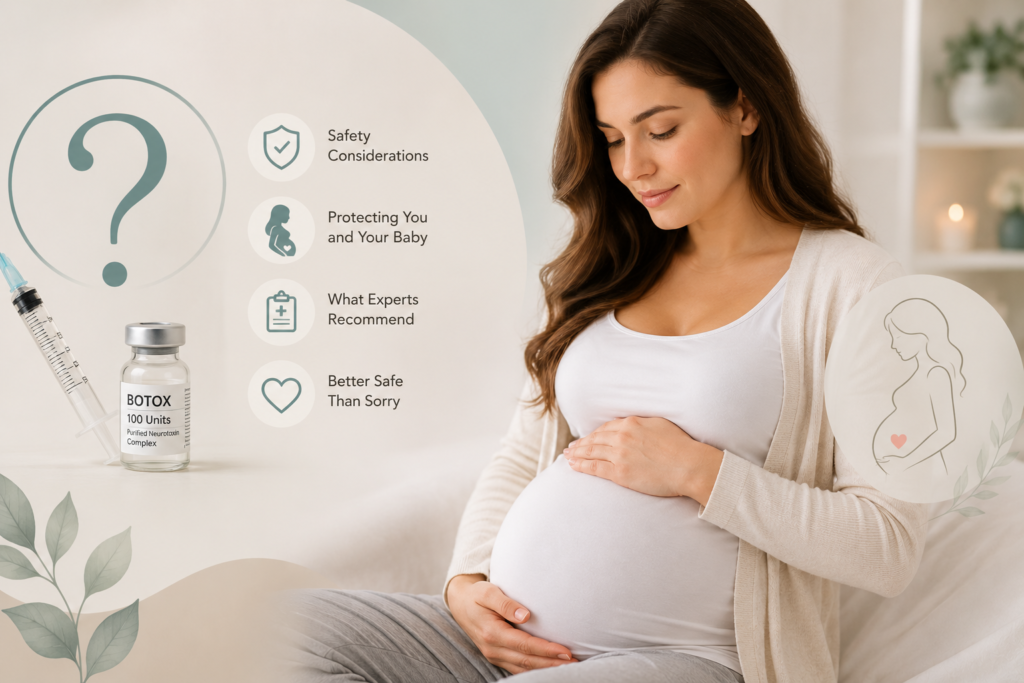
If you are wondering can you get botox while pregnant, you are not alone. Many women who regularly receive Botox before pregnancy want to know whether they can continue treatment while expecting.
Pregnancy brings many changes, including changes in skincare routines and cosmetic treatments. Although Botox is one of the most popular aesthetic procedures in the world, medical experts generally recommend postponing cosmetic Botox injections during pregnancy because there is not enough high quality safety data to confirm that it is risk free for the developing baby.
Understanding the available research can help you make informed decisions with confidence.
Why this question is so common
Botox has become one of the most requested cosmetic treatments worldwide. Millions of people choose it every year to reduce dynamic wrinkles, soften facial expressions, and maintain a refreshed appearance.
Many women receive routine Botox treatments before becoming pregnant. Since pregnancy often lasts nine months or longer when breastfeeding is included, it is natural to ask whether treatments should continue.
The answer is based less on evidence of proven harm and more on the lack of sufficient human research confirming safety during pregnancy.
What is Botox?
Botox Cosmetic contains onabotulinumtoxinA, a purified protein produced by Clostridium botulinum. When injected into selected muscles by a qualified provider, it temporarily reduces muscle activity, helping soften expression lines.
The treatment is FDA approved for several cosmetic indications, including forehead lines, frown lines between the eyebrows, crow’s feet, and platysma bands.
Botox is also approved for several medical conditions such as chronic migraine, cervical dystonia, overactive bladder, excessive sweating, and upper limb spasticity.
For patients considering cosmetic injectables after pregnancy, the specialists at Botox and Dysport provide individualized consultations based on facial anatomy and treatment goals.
Why doctors recommend waiting during pregnancy
The biggest reason is simple.
Researchers do not have enough controlled studies involving pregnant women to confidently confirm safety.
Medical organizations generally recommend avoiding medications and elective cosmetic procedures during pregnancy unless there is a clear medical need.
Because Botox is considered an elective cosmetic treatment in most situations, postponing treatment is usually the safest recommendation.
The FDA prescribing information states that there are no adequate and well controlled studies of Botox use in pregnant women.
Animal studies showed developmental effects when high doses exceeding those used clinically were administered during pregnancy. While these findings cannot be directly applied to cosmetic doses in humans, they contribute to the cautious recommendations.
Current evidence about Botox during pregnancy
Several published reviews have examined accidental Botox exposure during pregnancy.
Most available reports have not found an increased rate of birth defects directly linked to Botox exposure.
However, these studies are observational, involve relatively small numbers of patients, and cannot establish safety with certainty.
Researchers consistently conclude that available evidence remains insufficient to recommend routine cosmetic Botox during pregnancy.
Summary of current research
| Evidence | Findings | Clinical interpretation |
| FDA labeling | No adequate studies in pregnant women | Cosmetic treatment is generally postponed |
| Animal studies | Developmental effects at very high doses | Findings support cautious use |
| Human case reports | No consistent pattern of birth defects | Data remain limited |
| Professional recommendations | Delay elective cosmetic Botox | Current standard recommendation |
Does Botox reach the baby?
This is one of the most common concerns.
Botox works primarily where it is injected. Only extremely small amounts are believed to enter systemic circulation after proper cosmetic injections.
The Botox molecule is also relatively large, making placental transfer theoretically unlikely.
However, theoretical assumptions are not enough to establish medical safety.
Because researchers cannot ethically perform randomized clinical trials on pregnant women, there is still no definitive answer.
That uncertainty explains why physicians continue recommending postponement.
What happens if you accidentally receive Botox before knowing you were pregnant?
Many pregnancies are unplanned.
Some women receive Botox and discover they are pregnant days or weeks later.
Fortunately, available published reports have not demonstrated a clear increase in congenital abnormalities from these accidental exposures.
This does not automatically prove Botox is safe.
Instead, it means current evidence has not identified a consistent safety signal.
If accidental treatment occurs, patients should inform both their obstetrician and the provider who administered the injections.
Most physicians simply recommend routine prenatal care and monitoring.
Statistics that help explain current recommendations
Botox remains one of the most commonly performed nonsurgical cosmetic procedures worldwide.
Its popularity explains why pregnancy related questions continue increasing every year.
| Statistic | Latest data |
| Neuromodulator procedures performed in the United States during 2024 | More than 9.8 million |
| Growth compared with 2023 | Approximately 4 percent |
| Worldwide botulinum toxin procedures during 2024 | Approximately 7.8 million |
| Most common patient age worldwide | 35 to 50 years represented about 47 percent of treatments |
These numbers demonstrate how common Botox has become, especially among women in childbearing years.
Can Botox affect fertility?
Current evidence does not show that cosmetic Botox causes infertility.
There is no convincing evidence that Botox reduces the ability to become pregnant.
Likewise, there is no evidence that previous cosmetic Botox treatments increase miscarriage risk before conception.
Patients actively trying to conceive often discuss treatment timing with both their injector and obstetrician.
Some providers recommend avoiding cosmetic injections once pregnancy attempts begin because conception dates are not always predictable.
What about Botox while breastfeeding?
Breastfeeding is another common concern.
Very little information exists regarding Botox secretion into breast milk.
Because Botox acts locally and systemic absorption after cosmetic treatment appears minimal, significant transfer into breast milk is considered unlikely.
However, published human data remain limited.
For this reason, treatment decisions during breastfeeding should be individualized after discussing potential benefits and unknown risks with healthcare providers.
Cosmetic treatments generally considered safer during pregnancy
Pregnancy does not mean abandoning self care completely.
Many gentle skincare approaches remain appropriate.
Hydration, broad spectrum sunscreen, pregnancy safe moisturizers, and professionally recommended facials are commonly used.
Patients seeking healthy skin rather than wrinkle correction often benefit from personalized skincare rather than injectable treatments.
The experienced team at World of Beauty facial services can recommend professional skin treatments that fit your skincare goals after appropriate medical guidance.
Cosmetic treatments usually postponed during pregnancy
Many elective aesthetic procedures are delayed until after delivery.
| Treatment | Common recommendation during pregnancy |
| Botox | Usually postponed |
| Dermal fillers | Usually postponed |
| Chemical peels with stronger acids | Often postponed |
| Laser treatments | Frequently delayed unless medically necessary |
| Elective body contouring | Postponed |
Every patient is different.
Medical necessity, overall health, pregnancy complications, and physician recommendations all influence treatment decisions.
Why professional consultation matters
Pregnancy affects nearly every body system.
- Skin sensitivity changes.
- Blood circulation increases.
- Hormonal fluctuations alter pigmentation and healing.
Even treatments considered routine before pregnancy deserve fresh evaluation.
Experienced providers understand when cosmetic procedures should be delayed and when patients should return after pregnancy for optimal results.
Questions patients often ask
Will missing Botox for several months make wrinkles permanent?
No. Botox temporarily relaxes facial muscles. When treatments stop, muscle activity gradually returns.
Wrinkles usually return gradually to their previous appearance rather than suddenly becoming worse.
Can pregnancy make wrinkles appear more noticeable?
Sometimes. Changes in hydration, sleep, hormones, facial swelling, and skin elasticity may temporarily affect appearance. Many of these changes improve after pregnancy.
Is there a safe trimester for Botox?
Current recommendations do not identify any trimester as proven safe for cosmetic Botox.
Because safety has not been established throughout pregnancy, physicians generally recommend waiting until pregnancy is complete.
Should I cancel my appointment if I think I might be pregnant?
Yes. If pregnancy is possible, notify your provider before treatment. They can help determine the safest plan based on your individual situation.
When should you restart Botox after pregnancy?
There is no universal timeline.
Women who are not breastfeeding often resume treatment after delivery once medically cleared.
Those who breastfeed should discuss timing with both their obstetrician and aesthetic provider.
Personal medical history always matters more than a general timeline.
Planning your post pregnancy treatment
Many patients use pregnancy as an opportunity to reassess their long term skincare goals.
A consultation after delivery allows providers to evaluate facial changes that occurred during pregnancy.
Some women benefit from Botox alone.
Others achieve better results with a combination of Botox, fillers, and professional skincare.
Learning about available options through the World of Beauty website can help you prepare for future treatments once pregnancy and breastfeeding considerations have been addressed.
Medical organizations support a cautious approach
Although published reports have not demonstrated clear evidence of fetal harm from cosmetic Botox exposure, the absence of strong evidence is not the same as proof of safety.
Professional recommendations remain consistent.
Elective cosmetic Botox should generally be postponed until after pregnancy because high quality human safety data are unavailable.
This conservative approach prioritizes maternal and fetal well being while avoiding unnecessary exposure to medications during pregnancy.
Key facts at a glance
| Question | Answer |
| Can pregnant women routinely receive cosmetic Botox? | Medical experts generally recommend waiting |
| Is Botox proven harmful during pregnancy? | No clear evidence proves harm, but safety has not been established |
| Are there adequate human clinical studies? | No |
| Should accidental exposure cause panic? | Usually no, but notify your obstetrician |
| Can treatment resume after pregnancy? | Yes, following medical guidance |
Final thoughts
If you have been asking can you get botox while pregnant, the most accurate answer is that medical experts generally recommend postponing elective cosmetic Botox until after pregnancy.
Current research has not shown consistent evidence that accidental cosmetic Botox exposure causes birth defects. However, available human studies remain too limited to confirm safety with confidence.
Because pregnancy is a unique period of development, healthcare providers prioritize treatments with well established safety profiles whenever possible.
If you become pregnant before a scheduled Botox appointment, speak with both your obstetrician and your aesthetic provider. Waiting until pregnancy is complete remains the recommendation supported by current medical guidance.
Your health and your baby’s development should always come first, and cosmetic treatments can safely wait until the appropriate time.