
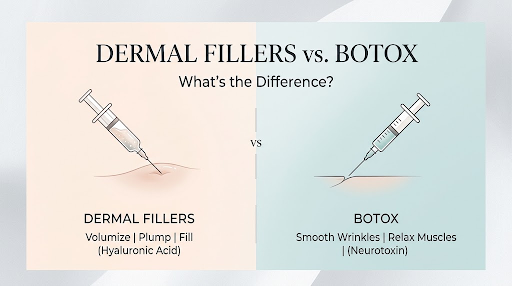
If you are considering cosmetic injectables, understanding Dermal Fillers vs. Botox is one of the most important steps before choosing a treatment. Although both are injectable treatments used to refresh facial appearance, they work in very different ways.
Botox temporarily reduces targeted muscle activity that contributes to expression lines, while dermal fillers add or restore volume beneath the skin.
The right option depends on whether your main concern is facial movement, lost volume, contour, folds, or a combination of concerns. The FDA specifically distinguishes botulinum toxin products from dermal fillers because they are different types of products with different purposes.
For people exploring cosmetic treatments in Miami, understanding these differences can make a consultation more productive and help set realistic expectations.
Botox and Dermal Fillers Are Not the Same Treatment
Botox is a brand of botulinum toxin type A. Similar neuromodulator products include Dysport, Xeomin, and Jeuveau. These injectable medications reduce the ability of selected muscles to contract as strongly, which can soften the appearance of wrinkles caused by repeated facial expressions.
The FDA has approved botulinum toxin products for temporary improvement in specific facial lines, including certain forehead lines, frown lines, and crow’s feet, depending on the product.
Dermal fillers work differently. They are injectable medical devices placed beneath the skin to create a smoother or fuller appearance. FDA approved filler indications include specific facial wrinkles and folds as well as augmentation of areas such as the lips, cheeks, and chin. Different filler products have different approved indications, so the exact product and injection area matter.
At World of Beauty Miami, injectable treatments can be selected according to the patient’s facial structure, concerns, and aesthetic goals rather than treating Botox and fillers as interchangeable services.
Dermal Fillers vs. Botox at a Glancey
| Feature | Botox | Dermal Fillers |
| Main purpose | Reduce selected muscle activity | Add or restore volume |
| Best suited for | Expression related lines | Volume loss, folds, contour, selected facial enhancement |
| Product category | Injectable drug | Injectable medical device |
| Common treatment areas | Forehead, frown lines, crow’s feet depending on product approval | Lips, cheeks, chin, facial folds depending on product approval |
| How results are produced | Reduces muscle contraction | Adds material beneath the skin |
| Results | Temporary | Usually temporary, depending on filler material and area |
| Treatment choice depends on | Muscle movement and wrinkle pattern | Volume loss, anatomy, product type, and treatment area |
This distinction is the foundation of choosing the right injectable. Someone concerned mainly about forehead movement may have very different needs from someone seeking fuller lips or improved cheek volume.
What Does Botox Do?
Botox Cosmetic works by reducing targeted muscle activity. Facial muscles repeatedly contract when you smile, frown, squint, or raise your eyebrows. Over time, these movements contribute to lines that become visible during facial expression.
By temporarily reducing contraction in specific muscles, Botox can make selected expression lines appear less noticeable.
People considering treatment for forehead lines, crow’s feet, or frown lines can learn more about Botox and Dysport treatments available at World of Beauty Miami.
Botox does not physically fill a wrinkle or replace lost facial volume. This is one of the biggest misconceptions about injectable treatments. If a cheek has lost fullness or someone wants to add volume to the lips, reducing muscle activity alone does not provide the same effect as filler.
What Do Dermal Fillers Do?
Dermal fillers are designed to add volume beneath the skin. Depending on the product and its approved use, fillers can be used to enhance fullness or address specific facial folds and contour concerns.
Hyaluronic acid is one of the most common materials used in temporary fillers. The FDA describes hyaluronic acid as a naturally occurring type of sugar found in tissues including the skin and cartilage. In gel form, it can bind water and create a filling effect.
Common areas considered for filler treatment can include the lips, cheeks, chin, and certain facial folds. The appropriate product depends on the treatment area because individual fillers have specific FDA approved indications.
People interested primarily in restoring facial volume or enhancing contours can review the available dermal filler treatments before scheduling a consultation.
How Popular Are Botox and Fillers?
Injectable cosmetic treatments remain among the most frequently performed minimally invasive aesthetic procedures.
According to the , more than 28.5 million minimally invasive cosmetic procedures were performed in the United States in 2024. Neuromodulator injections were the most frequently reported category, while hyaluronic acid fillers were also among the top procedures.
| 2024 US Procedure Category | Number Reported by ASPS |
| Neuromodulator injections | 9,883,711 |
| Hyaluronic acid fillers | 5,331,426 |
| Skin resurfacing procedures | 3,703,305 |
ASPS reported that neuromodulator treatments increased by about 4 percent compared with 2023, while hyaluronic acid filler procedures increased by about 1 percent.
These numbers show that both treatment categories are widely used, but popularity should never replace an individualized medical assessment.
Which Wrinkles Respond Better to Botox?
Wrinkles are not all created by the same process.
Expression related lines develop partly because of repeated movement from facial muscles. Botox is commonly considered when muscle activity plays a significant role in how the line appears.
Examples may include selected forehead lines, lines between the eyebrows, and crow’s feet, depending on the product used and the patient’s anatomy. The FDA has approved Botox Cosmetic for certain upper facial indications, and clinical trials have evaluated these specific treatment areas.
Patients interested in understanding other reasons people choose this treatment can also read about the benefits of Botox.
Which Concerns Respond Better to Fillers?
Fillers are generally considered when the main goal involves volume, fullness, or contour rather than muscle movement.
Examples include increasing fullness in approved areas such as the lips, cheeks, or chin, or improving certain moderate to severe facial folds. The FDA has also approved certain fillers for other specific indications, including some types of cheek acne scars and hand augmentation.
It is important not to assume that filler can safely be placed anywhere. The FDA notes that approved uses vary by product and specifically warns against several unapproved injection locations and body enhancement uses.
Botox vs. Fillers by Cosmetic Goal
| Cosmetic Goal | Treatment More Commonly Considered |
| Forehead expression lines | Botox or another appropriate neuromodulator |
| Frown lines between the brows | Botox or another appropriate neuromodulator |
| Crow’s feet | Botox or another appropriate neuromodulator |
| Lip volume | Appropriate dermal filler |
| Cheek volume | Appropriate dermal filler |
| Chin enhancement | Appropriate dermal filler |
| Facial folds caused partly by volume loss | Appropriate dermal filler |
| Combination of movement and volume concerns | Individual assessment may involve more than one treatment |
This table is a general comparison rather than a treatment recommendation. Facial anatomy, medical history, product selection, and individual goals can change the appropriate approach.
Can You Get Botox and Fillers Together?
Some aesthetic treatment plans may involve both neuromodulators and dermal fillers because the two treatments address different concerns.
For example, a patient might be concerned about expression lines in the upper face and volume changes elsewhere. Conceptually, these concerns involve different mechanisms.
However, there is an important evidence based limitation to understand. The FDA states that the safe use of dermal fillers in combination with Botox or other treatments has not been evaluated in controlled clinical studies.
That does not mean the treatments can never appear in the same aesthetic plan. It means patients should not assume that combining procedures is automatically appropriate. Timing, product selection, treatment areas, anatomy, and medical history should be reviewed by a qualified licensed provider.
Which Treatment Lasts Longer?
There is no universal answer.
Botox Cosmetic produces temporary effects because targeted muscle activity gradually returns. Duration can vary based on treatment area, dose, individual response, and the product used.
Dermal filler duration is even more dependent on the specific material and treatment location. The FDA notes that many fillers are gradually absorbed by the body and may need to be repeated to maintain the desired effect. The duration depends on both the filler material and the area injected.
Because of these variables, promises that every Botox treatment or every filler will last a specific number of months should be viewed cautiously.
What Are the Possible Side Effects?
Both treatments are medical procedures and have potential risks.
Botox Side Effects
Reported reactions can include localized pain, redness, swelling, bruising, headache, and temporary weakness in nearby muscles. Depending on the treatment area, clinical trials have also reported eyelid or brow drooping in some patients.
The Botox Cosmetic prescribing information includes a boxed warning about the potential spread of toxin effects beyond the injection area. Patients should discuss the full prescribing information and their medical history with the treating professional.
Dermal Filler Side Effects
Common filler reactions reported by the FDA include swelling, bruising, redness, pain, tenderness, itching, and rash.
A rare but serious complication can occur if filler unintentionally enters a blood vessel. The FDA warns that vascular injection can potentially result in tissue damage, vision abnormalities including blindness, or stroke.
This is why filler injections should be treated as medical procedures rather than casual beauty services.
Safety Comparison
| Safety Consideration | Botox | Dermal Fillers |
| Common temporary reactions | Pain, swelling, redness, bruising | Swelling, redness, bruising, tenderness |
| Product choice matters | Yes | Yes |
| Provider training matters | Yes | Yes |
| Serious complications possible | Yes | Yes |
| Appropriate medical screening needed | Yes | Yes |
| Self administration appropriate | No | No |
The FDA specifically advises consumers not to purchase fillers directly online, inject themselves, or use needle free devices for filler injection. FDA approved dermal fillers are prescription use products intended to be administered by qualified health care professionals.
How Do You Choose Between Botox and Fillers?
Start with the concern rather than the treatment name.
If the concern appears mainly when you smile, frown, squint, or raise your eyebrows, muscle movement may be contributing significantly.
If the concern involves reduced fullness, facial contour, or an area that would benefit from approved volume enhancement, a filler may be considered.
A qualified provider should also consider facial anatomy, health history, previous injectable treatments, medications, allergies, treatment expectations, and the exact product being considered.
The goal should not simply be choosing Botox or filler because one is more popular. The goal is identifying what is creating the concern and choosing an appropriate treatment for that cause.
Questions to Ask Before Treatment
Before receiving an injectable treatment, ask what exact product will be used, whether it is FDA approved for the intended purpose, who will perform the injection, what training they have, what side effects are possible, and what you should do if a complication occurs.
For fillers in particular, the FDA recommends choosing a licensed health care provider who understands facial anatomy, filler placement, and the management of complications.
Patients should also disclose health conditions, allergies, medications, previous aesthetic procedures, and any active skin inflammation or infection before treatment.
Final Thoughts
The key difference between Botox and dermal fillers is what each treatment actually changes.
Botox temporarily reduces selected muscle activity and is commonly used for expression related facial lines. Dermal fillers add or restore volume and can enhance approved facial areas or soften certain folds. One treatment does not replace the other.
The best choice depends on anatomy, the cause of the concern, treatment goals, product selection, and medical suitability. Some people may benefit from one type of injectable, while others may discuss a broader treatment plan with their provider.
If you are considering Botox, fillers, or another injectable treatment, a professional consultation is the best place to start. It allows the provider to evaluate facial movement, volume, structure, medical history, and expectations before recommending an appropriate approach.