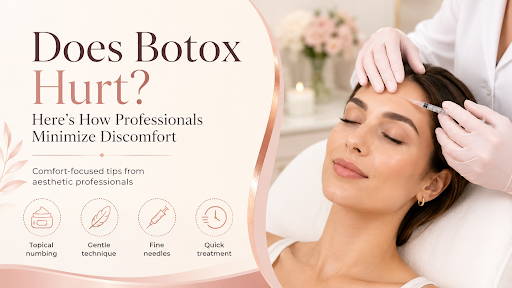
If you are thinking about Botox for the first time, one of the first questions is usually simple: does botox hurt? The honest answer is that Botox injections may cause a quick pinch or mild stinging, but most people describe the discomfort as brief and manageable. The treatment uses a very small needle, takes only a few minutes in most cosmetic areas, and does not usually require downtime.
Botox is one of the most common nonsurgical cosmetic treatments worldwide. According to ISAPS, botulinum toxin was the most common nonsurgical procedure for men and women in 2023, with 8.8 million procedures performed by plastic surgeons worldwide.
At trusted aesthetic clinics like World of Beauty Miami, comfort starts before the needle touches the skin. A careful consultation, proper technique, clean treatment planning, and realistic expectations all help reduce anxiety and make the appointment easier.
How Painful Is Botox?
Most people do not describe Botox as truly painful. They usually describe it as a tiny pinch, pressure, or quick sting that lasts only a second at each injection point.
The discomfort is usually lower than treatments that reach deeper skin layers or cover larger treatment areas. Botox targets selected facial muscles with small doses, which is why the treatment is usually fast and well tolerated.
The American Academy of Dermatology notes that botulinum toxin treatment is commonly used for frown lines, crow’s feet, and excessive underarm sweating, and that many patients return to everyday activities immediately after treatment.
Botox Discomfort at a Glance
| Factor | What Patients Usually Feel | Why It Happens |
| Needle entry | Quick pinch | The needle briefly enters the skin |
| Product placement | Mild pressure or sting | A small amount of solution is injected |
| After treatment | Possible tenderness or redness | Skin reacts to injection points |
| Bruising risk | Possible small bruise | Tiny blood vessels can be touched |
| Overall pain level | Usually mild | Fine needles and shallow placement are used |
Why Botox Usually Feels More Comfortable Than Expected
Fear often makes Botox sound worse than it actually feels. Many first time patients expect intense pain because the treatment involves injections. In reality, cosmetic Botox uses very fine needles and precise placement.
Each injection is quick. The injector usually places small amounts of product into targeted muscles, not large areas of tissue. This makes the treatment feel more like a series of small pinches than a painful procedure.
Professional injectors also control the pace of the appointment. They explain each step clearly, prepare the skin properly, and avoid unnecessary injection points. That alone makes a major difference in comfort.
Anxiety can increase pain sensitivity. When patients understand what will happen, they usually feel calmer and tolerate treatment better.
What Areas Feel More Sensitive?
Not every Botox area feels the same. Some areas have thinner skin, stronger muscles, or more nerve sensitivity.
The forehead is often one of the easier areas to tolerate because the injections are quick and shallow. Crow’s feet may feel slightly more sensitive because the skin around the eyes is delicate. Frown lines between the brows can feel sharper because the muscles are stronger and more concentrated.
Masseter Botox, used around the jaw area, can feel different because the muscle is larger and deeper. Even then, discomfort is usually manageable when performed by an experienced provider.
| Treatment Area | Typical Sensitivity | Reason |
| Forehead lines | Low to moderate | Broad area with quick injections |
| Frown lines | Moderate | Stronger muscle activity between brows |
| Crow’s feet | Moderate | Thinner skin near the eyes |
| Bunny lines | Low to moderate | Small treatment area |
| Jaw or masseter area | Moderate | Larger and deeper muscle area |
How Professionals Minimize Botox Discomfort
Professional technique matters more than most patients realize. A skilled injector can make Botox feel much easier by controlling needle angle, injection speed, dosage, and patient positioning.
The first step is proper consultation. A provider should review your goals, facial movement, medical history, and previous injection experiences. This helps create a treatment plan that is safe and appropriate.
Some providers use ice before injections to briefly numb the skin. Others may use topical numbing cream for highly sensitive patients, although many Botox appointments do not require it.
Good injectors also use precise facial mapping. This means they identify the correct muscles before injecting. More injections do not automatically mean better results. The goal is accuracy, not over treatment.
| Comfort Method | How It Helps | Best For |
| Ice before injection | Reduces skin sensitivity | Nervous or sensitive patients |
| Fine needle selection | Creates a smaller needle sensation | Most cosmetic Botox areas |
| Controlled injection speed | Reduces pressure and stinging | Delicate areas |
| Clear communication | Lowers anxiety | First time patients |
| Facial mapping | Avoids unnecessary injection points | Natural looking results |
What Can Make Botox Hurt More?
Botox discomfort is usually mild, but some things can make it worse. The biggest issue is choosing an inexperienced injector. Poor technique can lead to more bruising, swelling, soreness, or uneven results.
Another factor is arriving stressed, dehydrated, or sleep deprived. Your body can feel more sensitive when you are tense or run down.
Certain medications and supplements may increase bruising risk. This can include blood thinners, aspirin, ibuprofen, fish oil, and some herbal supplements. Never stop prescribed medication without speaking to your healthcare provider, but always tell your injector what you take.
Alcohol may also increase bruising risk for some people. Many aesthetic providers recommend avoiding alcohol before and after treatment.
Is Botox More Painful Than Microneedling?
Botox and microneedling feel different because they treat different concerns. Botox targets muscle movement. Microneedling creates controlled microchannels in the skin to support collagen remodeling and improve texture.
Many patients find Botox easier because it involves fewer quick injections and is completed faster. Microneedling treats a larger surface area, so the sensation can feel more intense. However, professional numbing cream is commonly used before microneedling to improve comfort.
If your main concern is expression lines, Botox may be more suitable. If your concern is skin texture, pores, acne scars, or collagen support, microneedling treatment may be the better option.
| Treatment | Main Target | Typical Sensation | Comfort Support |
| Botox | Expression lines and muscle movement | Quick pinches | Ice or numbing if needed |
| Microneedling | Texture, pores, scars, collagen support | Scratchy or prickly feeling | Numbing cream is commonly used |
Is Botox More Painful Than Laser Hair Removal?
Laser hair removal uses light energy to target hair follicles. The sensation is often described as a quick snap or warm sting. Discomfort depends on the area treated, hair thickness, skin sensitivity, and device settings.
Botox usually feels shorter because the treatment area is smaller and the appointment is quick. Laser hair removal can take longer, especially for larger body areas.
Both treatments are manageable when performed professionally. If you already tolerate laser hair removal, Botox will likely feel brief in comparison.
How Long Does Botox Soreness Last?
Most Botox tenderness resolves quickly. Some redness or small bumps may appear immediately after treatment and usually fade within a short time. Mild bruising can last longer if it occurs.
The AAD states that many patients return to everyday activities immediately after botulinum toxin treatment, and results often appear within 3 to 7 days. Improvements usually last about 3 to 4 months and sometimes longer.
You should contact your provider if you experience unusual symptoms, worsening pain, spreading swelling, vision changes, difficulty swallowing, or breathing problems. These are not typical cosmetic Botox reactions and should be taken seriously.
What Should You Do Before Botox to Reduce Discomfort?
Preparation makes the appointment smoother. Arrive with clean skin if possible. Avoid scheduling Botox right after intense sun exposure, skin irritation, or aggressive facial treatments.
Eat something before your appointment if you are prone to lightheadedness. Some people feel nervous around needles, and an empty stomach can make that worse.
Tell your injector about medical conditions, allergies, medications, supplements, pregnancy, breastfeeding, previous cosmetic treatments, and past reactions to injections.
A safe provider would rather know too much than miss something important.
What Should You Avoid After Botox?
Aftercare helps reduce irritation and supports the best result. Your provider may give instructions based on your treatment area and medical history.
Common guidance includes avoiding rubbing the treated area, heavy workouts, alcohol, and excessive heat for a short time after treatment. Patients are often advised to remain upright for several hours after injections.
These steps are simple, but ignoring them can increase irritation or affect the treatment outcome.
Why Provider Skill Matters for Comfort and Safety
Botox is common, but it is still a medical aesthetic treatment. The injector needs to understand facial anatomy, muscle movement, dosing, symmetry, and safety.
Recent FDA warnings about counterfeit or unapproved Botox products show why patients should only receive injections from licensed and trained professionals using appropriate products. AP reported that the FDA warned multiple websites for selling counterfeit or unapproved Botox products and advised patients to seek care from licensed professionals.
The safest Botox experience is not just about reducing discomfort. It is about getting the right treatment from the right professional in the right setting.
Does More Botox Mean More Pain?
Not always. More units do not automatically mean more pain because units are not the same as injection points.
A treatment may use more product in stronger muscles but still involve only a limited number of injections. What affects discomfort more is the number of injection points, location, technique, and personal sensitivity.
This is why cookie cutter treatment plans are a problem. A professional assessment should guide dosage and placement.
Who May Feel More Discomfort?
Some patients are naturally more sensitive. People with needle anxiety may feel more discomfort because anticipation increases tension. Patients with very thin skin or recent skin irritation may also be more reactive.
Those who bruise easily may notice more tenderness afterward. People who had poor injection experiences in the past may also feel more nervous.
A good provider will not dismiss this. They will slow down, explain the process, and use comfort strategies when appropriate.
Botox Comfort Facts
| Question | Practical Answer |
| Does Botox usually hurt? | Usually only mildly and briefly |
| Is numbing always needed? | No, but it may help sensitive patients |
| Can bruising happen? | Yes, small bruises are possible |
| Is pain after Botox normal? | Mild tenderness can happen temporarily |
| Should severe pain be ignored? | No, contact your provider promptly |
Final Thoughts
So, does Botox hurt? For most patients, Botox feels like a quick pinch rather than real pain. Mild soreness, redness, swelling, or bruising can happen, but these effects are usually temporary when treatment is performed correctly.
The bigger issue is provider quality. A skilled professional can reduce discomfort through proper planning, fine needle technique, calm communication, and safe injection practices.
Botox should never feel rushed, careless, or confusing. You should understand what is being treated, why the placement matters, what results to expect, and how to care for your skin afterward.
If you are considering Botox or another aesthetic treatment, choose a clinic that values both comfort and clinical judgment. You can explore professional beauty and skin services through the World of Beauty Miami homepage and compare options that match your goals, comfort level, and skin needs.
One Response