
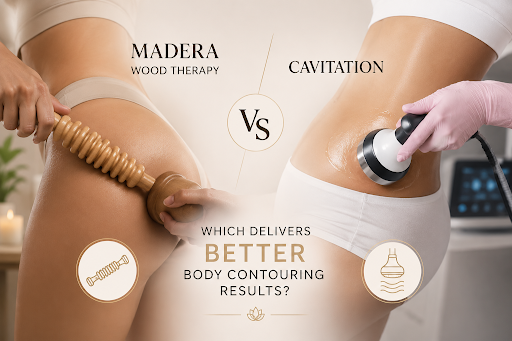
If you are considering a non surgical body contouring treatment, you have probably come across the comparison Madera Wood Therapy vs Cavitation.
Both treatments are popular for reducing the appearance of stubborn fat, improving body contours, and enhancing confidence without surgery or lengthy recovery. However, they work in completely different ways and produce different results.
Understanding their benefits, limitations, and ideal candidates can help you choose the treatment that best matches your body goals.
Body contouring treatments have become increasingly popular because they offer visible improvements without the downtime associated with surgical procedures. Whether your goal is smoother skin, reduced cellulite, or a more sculpted silhouette, selecting the right treatment starts with understanding how each option works.
Many clients begin their body transformation journey by exploring the personalized wellness treatments available at World of Beauty Miami, where every treatment plan is customized according to individual goals.
Understanding Body Contouring
Body contouring refers to treatments designed to improve body shape by reducing localized fat deposits, improving skin texture, and enhancing natural curves.
Unlike weight loss programs, body contouring focuses on reshaping specific areas that often resist healthy eating and regular exercise.
Common treatment areas include:
- Abdomen
- Waist
- Thighs
- Arms
- Back
- Hips
- Buttocks
Modern body contouring treatments are non invasive, allowing most people to resume daily activities immediately after their appointment.
What Is Madera Wood Therapy?
Madera Wood Therapy is a specialized massage technique that uses handcrafted wooden tools to stimulate the body’s lymphatic system, improve circulation, and encourage the natural breakdown of fat deposits.
Originating in Colombia, this treatment has become increasingly popular for individuals seeking a natural approach to body sculpting.
Different wooden instruments are designed to target specific body areas while applying controlled pressure to stimulate soft tissue.
Many clients choose Madera Wood Therapy because it combines body contouring with relaxation while helping improve skin firmness and reducing the appearance of cellulite.
How Does Madera Wood Therapy Work?
The treatment uses repetitive massage movements with specially designed wooden tools.
These movements may help:
- Improve lymphatic drainage
- Increase blood circulation
- Reduce fluid retention
- Improve skin elasticity
- Temporarily reduce the appearance of cellulite
- Relax tight muscles
The treatment does not destroy fat cells. Instead, it supports the body’s natural lymphatic processes and improves the appearance of treated areas.
Benefits of Madera Wood Therapy
Many clients notice gradual improvements after several sessions.
Common benefits include:
- Improved body definition
- Reduced puffiness
- Better circulation
- Smoother looking skin
- Improved lymphatic function
- Relaxing treatment experience
Results are typically most noticeable when combined with regular exercise, proper hydration, and balanced nutrition.
What Is Cavitation?
Cavitation, also known as ultrasonic cavitation, is a non surgical body contouring treatment that uses low frequency ultrasound waves to target localized fat deposits beneath the skin.
The ultrasound energy creates microscopic pressure changes around fat cells, disrupting their membranes while leaving surrounding tissues largely unaffected.
The body gradually processes and eliminates the released fat through normal metabolic pathways.
Clients looking for targeted fat reduction often choose Ultrasonic Cavitation as part of a customized body contouring plan.
How Does Cavitation Work?
During treatment, a handheld device delivers ultrasound energy into the targeted fat layer.
Unlike surgical liposuction, no incisions or anesthesia are required.
After treatment:
- Fat cells release their contents.
- The lymphatic system processes the released fat.
- The liver naturally metabolizes these substances.
- The body gradually eliminates them.
Proper hydration and regular physical activity help support this natural elimination process.
Benefits of Cavitation
Cavitation offers several advantages for suitable candidates.
These include:
- Reduction of localized fat deposits
- Improved body contours
- Non surgical treatment
- Minimal recovery time
- Comfortable treatment sessions
- Suitable for multiple body areas
Although cavitation reduces fat cells in treated areas, maintaining results still depends on healthy lifestyle habits.
Madera Wood Therapy vs Cavitation: Side by Side Comparison
| Feature | Madera Wood Therapy | Cavitation |
| Primary Goal | Improve circulation and reduce cellulite appearance | Reduce localized fat deposits |
| Technology | Manual wooden massage tools | Low frequency ultrasound |
| Fat Cell Reduction | No | Yes |
| Improves Lymphatic Drainage | Excellent | Moderate |
| Cellulite Improvement | Very Good | Good |
| Skin Firmness | Good | Moderate |
| Downtime | None | None |
| Comfort Level | Relaxing massage | Mild warming sensation |
Which Treatment Produces Faster Results?
Both treatments require multiple sessions for optimal results.
However, the visible improvements differ.
Madera Wood Therapy often produces an immediate feeling of reduced swelling because it stimulates lymphatic drainage and improves circulation.
Cavitation generally requires several weeks before noticeable fat reduction becomes visible because the body needs time to metabolize the treated fat cells.
Scientific Evidence
Research continues to evaluate non surgical body contouring treatments.
Several published studies have reported encouraging outcomes.
| Clinical Finding | Reported Outcome |
| Average cavitation circumference reduction | Approximately 2 to 4 centimeters after a treatment series depending on treatment area and individual factors |
| Patient satisfaction with non invasive body contouring | Frequently exceeds 80 percent in published cosmetic medicine studies |
| Typical treatment sessions | Six to twelve sessions depending on treatment goals |
| Downtime | Minimal or none |
Clinical outcomes vary depending on body composition, hydration, metabolism, and adherence to post treatment recommendations.
Who Is the Best Candidate for Madera Wood Therapy?
Madera Wood Therapy is often recommended for individuals who:
- Experience fluid retention.
- Want smoother looking skin.
- Have mild cellulite.
- Prefer natural manual treatments.
- Want relaxation alongside cosmetic improvement.
It is particularly beneficial for maintaining healthy lymphatic circulation while complementing an overall wellness routine.
Who Is the Best Candidate for Cavitation?
Cavitation is best suited for individuals who are close to their ideal body weight but struggle with stubborn pockets of fat that do not respond to a healthy diet or regular exercise.
Good candidates generally:
- Have a stable weight.
- Want to reduce fat in specific areas.
- Maintain realistic expectations.
- Follow a healthy lifestyle.
- Are looking for a non surgical alternative to liposuction.
Cavitation is not intended as a weight loss treatment. Instead, it is designed to improve body shape by targeting localized fat deposits.
Which Treatment Is Better for Cellulite?
Cellulite develops due to structural changes beneath the skin rather than excess fat alone.
Madera Wood Therapy often produces better visible improvements in cellulite because the massage techniques stimulate circulation, encourage lymphatic drainage, and temporarily smooth uneven skin texture.
Cavitation can also improve the appearance of cellulite by reducing fat volume beneath the skin, but it is generally more effective for contouring than for improving skin texture.
| Concern | Madera Wood Therapy | Cavitation |
| Cellulite Appearance | Excellent | Good |
| Skin Texture | Excellent | Moderate |
| Fluid Retention | Excellent | Moderate |
| Localized Fat Reduction | Moderate | Excellent |
Which Treatment Is Better for Fat Reduction?
When comparing Madera Wood Therapy vs Cavitation, cavitation has a clear advantage for reducing localized fat.
Ultrasonic cavitation directly targets fat cells beneath the skin, while Madera Wood Therapy focuses primarily on improving circulation, reducing swelling, and enhancing lymphatic drainage.
People whose primary goal is fat reduction often benefit most from cavitation as part of a comprehensive treatment plan.
Those seeking overall body sculpting may achieve the best outcome by combining multiple therapies through Customized Body Contouring Programs, where treatments are selected according to individual body composition and aesthetic goals.
Can Madera Wood Therapy and Cavitation Be Combined?
Yes. Many providers combine both treatments because they address different aspects of body contouring.
Cavitation focuses on reducing stubborn fat deposits, while Madera Wood Therapy helps support lymphatic drainage and may reduce temporary swelling following treatment.
Using both treatments together can create a more comprehensive body contouring approach for suitable candidates.
A provider will determine the appropriate treatment schedule based on your health history, body composition, and desired results.
Safety Comparison
Both treatments are considered non invasive and generally have minimal recovery time when performed by trained professionals.
Neither treatment requires general anesthesia or surgical incisions.
| Safety Factor | Madera Wood Therapy | Cavitation |
| Surgery Required | No | No |
| Recovery Time | None | None |
| Anesthesia | No | No |
| Risk of Scarring | None | None |
| Return to Daily Activities | Immediate | Immediate |
Although both procedures have excellent safety profiles, individuals with certain medical conditions may not be suitable candidates.
A professional consultation should always be completed before beginning treatment.
Possible Side Effects
Most side effects are temporary and mild.
Madera Wood Therapy
Possible temporary effects include:
- Mild soreness
- Temporary redness
- Increased urination due to improved lymphatic drainage
- Mild tenderness
Cavitation
Possible temporary effects include:
- Mild warmth in the treated area
- Temporary redness
- Slight tenderness
- Increased thirst
Serious complications are uncommon when treatments are performed by qualified professionals following appropriate treatment protocols.
Treatment Frequency
Results develop gradually because body contouring is a process rather than a single treatment.
| Treatment | Typical Number of Sessions | Session Frequency |
| Madera Wood Therapy | 8 to 12 | One to three sessions each week |
| Cavitation | 6 to 10 | Every five to seven days |
Your provider may recommend maintenance sessions depending on your long term goals.
Factors That Influence Results
Several lifestyle factors play an important role in treatment outcomes.
These include:
- Hydration
- Regular physical activity
- Balanced nutrition
- Sleep quality
- Body composition
- Treatment consistency
Maintaining healthy habits allows the body to preserve improvements for a longer period.
Cost Comparison
Treatment costs vary depending on geographic location, provider experience, and treatment area.
| Treatment | Average Cost Per Session in the United States |
| Madera Wood Therapy | Approximately $80 to $200 |
| Cavitation | Approximately $100 to $300 |
Many clinics offer treatment packages that reduce the overall cost when multiple sessions are purchased together.
Frequently Asked Questions
Does Madera Wood Therapy permanently remove fat?
No. Madera Wood Therapy does not destroy fat cells. It primarily improves circulation, supports lymphatic drainage, and enhances the appearance of the skin.
Does cavitation permanently destroy fat cells?
Cavitation damages targeted fat cells, which are then processed naturally by the body. Maintaining a stable weight helps preserve long term results.
Which treatment is more relaxing?
Most people describe Madera Wood Therapy as a relaxing massage experience because it uses rhythmic manual movements.
Which treatment produces faster visible changes?
Madera Wood Therapy may produce immediate improvements in swelling and skin appearance.
Cavitation usually requires several weeks before noticeable fat reduction becomes visible.
Can I exercise after treatment?
Yes. Light to moderate physical activity is often encouraged because it supports circulation and healthy metabolism.
Final Verdict
When comparing Madera Wood Therapy vs Cavitation, there is no single treatment that is best for everyone. The ideal choice depends on your individual goals.
If your primary concern is improving circulation, reducing fluid retention, and smoothing the appearance of cellulite, Madera Wood Therapy is an excellent option.
If your goal is reducing stubborn fat deposits and creating more defined body contours without surgery, cavitation generally delivers more noticeable fat reduction.
Many clients achieve the best overall results by combining both treatments as part of a personalized body contouring plan developed by experienced professionals.
If you are unsure which treatment is right for you, scheduling a consultation allows your provider to evaluate your body composition, discuss your goals, and recommend the most effective approach based on your individual needs.
For additional insights into non surgical aesthetic treatments and professional skincare, you may also enjoy reading Benefits of Regular Facials, which explains how consistent treatments contribute to healthier skin and long term confidence.