
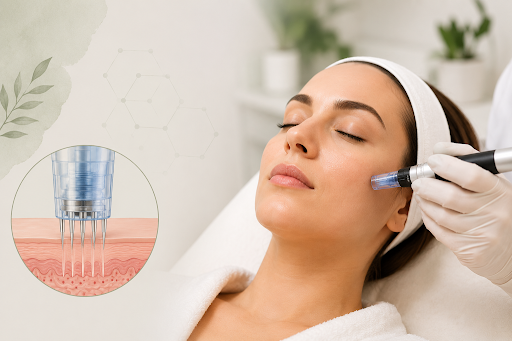
What is Microneedling? It is a minimally invasive skin treatment that uses fine, sterile needles to create controlled tiny channels in the skin. These channels signal the body to repair itself by making fresh collagen and elastin, two proteins linked with firmness, smoother texture, and a healthier looking surface.
At World of Beauty Miami, clients often ask about this treatment because it can refresh the skin without surgery and with a recovery period that is usually shorter than many deeper resurfacing options.
Microneedling is also called collagen induction therapy. During treatment, a trained provider moves a device across the skin at a selected depth. The goal is not aggressive damage.
The goal is a precise, temporary wound healing response. As the skin repairs, it can look smoother, firmer, more even, and more radiant over time.
Medical sources say it may improve acne scars, stretch marks, wrinkles, enlarged pores, and uneven tone. The FDA has cleared certain microneedling devices for improving facial acne scars, facial wrinkles, and abdominal scars in adults aged 22 and older.
How microneedling works
Microneedling works through three healing phases. First, the tiny needle channels trigger a short inflammatory response that brings blood flow and repair signals to the area.
Next, fibroblast activity increases, helping create new collagen and elastin. Finally, the new collagen remodels over several months, which is why results are gradual rather than instant.
Microneedling does not fill the skin like dermal filler, and it does not relax muscles like neuromodulators. Instead, it supports the skin’s own renewal process.
A 2024 dermatology review describes microneedling as useful across concerns such as acne scars, wrinkles, hyperpigmentation, and stretch marks, with its effect tied to controlled micro injury and increased collagen and elastin activity.
What can microneedling improve?
Microneedling is commonly chosen for texture concerns. Acne scars, especially shallow rolling or boxcar scars, are among the most researched uses. It may also help fine lines, dullness, rough texture, enlarged pores, and mild laxity.
| Skin Concern | Why Microneedling May Help | Realistic Expectation |
| Scars from acne | New collagen can soften uneven scar texture. | Gradual improvement over a series of treatments. |
| Fine lines | Collagen support may improve skin firmness and elasticity. | Subtle smoothing rather than a facelift-like effect. |
| Enlarged pores | Firmer surrounding skin can make pores appear more refined. | Best results when combined with oil control and a consistent skincare routine. |
| Uneven texture | Skin renewal can help smooth rough or uneven patches. | Noticeable improvement typically occurs after multiple sessions. |
| Stretch marks | Collagen remodeling may soften texture and reduce color contrast. | Results vary depending on the age and depth of the stretch marks. |
Research on acne scars is encouraging but not perfect. A systematic review of acne scar treatments reported that patients treated with microneedling achieved some improvement, with scar appearance gains in the range of 31 percent to 62 percent. Another review noted patient reported improvement of 51 percent to 60 percent in scar appearance, 40 percent to 50 percent in texture, and 80 percent to 85 percent overall satisfaction in one cited study. These are study findings, not guaranteed results.
Research snapshot
| Evidence Point | Reported Statistic | What It Means for Clients |
| FDA-cleared use | Certain devices are FDA-cleared for facial acne scars, facial wrinkles, and abdominal scars in adults aged 22 and older. | Microneedling has recognized medical device applications when performed with appropriate FDA-cleared devices. |
| Acne scar improvement | A systematic review reported a 31% to 62% improvement range. | Many people with acne scars experience noticeable improvement, although results vary by individual. |
| Patient satisfaction | One reviewed study found an 80% to 85% patient satisfaction rate. | Satisfaction is often high when clients have realistic expectations about the outcomes. |
| Treatment spacing | Many people require treatments approximately 3 to 8 weeks apart. | A series of sessions is generally more effective than a single treatment. |
| Time to results | Visible results may take 3 to 6 months to develop. | Collagen remodeling is a gradual process, so improvements appear progressively over time. |
These stats come from FDA guidance, Cleveland Clinic information, and peer reviewed dermatology literature.
What happens during a session?
A professional session usually starts with a consultation. Your provider reviews your concerns, health history, products, recent treatments, and goals. This matters because skin with active inflammation, open wounds, infection, cold sores, certain rashes, or a tendency toward keloids may need a different plan.
Before the procedure, the skin is cleansed and a numbing cream is often applied. Cleveland Clinic notes that providers may apply numbing medication about 30 to 45 minutes before treatment. Once the skin is ready, the provider treats the planned area in controlled passes. Some areas feel scratchy or warm. Bony areas like the forehead can feel more sensitive. Pinpoint bleeding can happen with deeper treatment, depending on depth and the concern being treated.
For clients who want professional care, sterile technique, and a plan matched to their skin goals, the microneedling treatment in Miami page is the most relevant service page to visit.
Microneedling results timeline
Microneedling is not a one day transformation. The first visible change is often a glow once redness settles. Texture changes usually build with each session.
| Timeline | Common Skin Response |
| Same day | Redness, warmth, a feeling of tightness, and mild swelling are common immediately after treatment. |
| Day 1 to Day 3 | Redness gradually fades, and the skin may feel dry, tight, or sensitive. |
| Day 3 to Day 7 | Light flaking or roughness may occur as the skin renews itself. |
| Week 2 to Week 6 | Skin tone and texture may begin to appear smoother and more even. |
| Month 3 to Month 6 | Collagen remodeling continues, and more noticeable improvements may become visible. |
Cleveland Clinic states that redness and swelling may last up to five days, that multiple treatments are often needed, and that results can take 3 to 6 months to appear. It also notes that treatments are commonly spaced about 3 to 8 weeks apart.
Who is a good candidate?
A good candidate is usually someone with realistic expectations who wants improvement in texture, mild lines, pores, scars, or overall skin quality. Microneedling may be considered for many skin tones because it does not rely on heat in the same way as some lasers. Still, technique matters, especially for people prone to post treatment pigmentation.
You may need to delay or avoid microneedling if you have active acne, an active skin infection, frequent cold sores, eczema or psoriasis in the treatment area, a history of keloid scarring, a bleeding disorder, use of blood thinning medication, or a weakened immune system. Cleveland Clinic and FDA both recommend discussing health history and risks with a trained provider before treatment.
Professional microneedling versus at home rollers
At home rollers are not the same as professional microneedling. Professional devices can reach deeper layers and should be used with sterile cartridges, proper depth control, and careful skin assessment. The FDA states that it has not authorized microneedling medical devices for over the counter sale. It also advises choosing a health care provider with special training because devices may reach nerves, blood vessels, and deeper skin structures.
This matters because improper use can increase the risk of infection, irritation, scarring, or pigmentation changes. Sharing tools or reusing needle cartridges is unsafe. A professional setting also allows the provider to decide when microneedling is not the right choice.
Aftercare tips for better healing
After microneedling, the skin barrier is temporarily more sensitive. Keep the routine simple. Use a gentle cleanser, hydrating serum if recommended, moisturizer, and broad spectrum sunscreen. Avoid direct sun, heavy sweating, exfoliating acids, retinoids, alcohol based products, fragrance heavy products, and picking at flaking skin until your provider clears you.
Hydration and barrier support are important between sessions. Many clients pair collagen focused treatments with maintenance skin care, and professional facial treatments in Miami can help keep the skin clean, hydrated, and balanced between more corrective services.
What about RF microneedling?
Radiofrequency microneedling combines needles with heat energy. It is different from standard microneedling, and the risk profile is different. In October 2025, the FDA warned that serious complications had been reported with certain uses of RF microneedling devices, including burns, scarring, fat loss, disfigurement, nerve damage, and cases needing medical intervention. The FDA recommends seeking care from a licensed provider with training and experience if considering RF microneedling.
This does not mean every RF treatment is unsafe. It means device choice, training, settings, skin assessment, and aftercare are critical.
Final thoughts
Microneedling is a respected skin rejuvenation treatment because it works with the body’s natural repair process. It can improve texture, acne scars, fine lines, pores, and overall skin quality, especially when performed as a planned series. The best results come from proper candidate selection, sterile technique, realistic expectations, and consistent aftercare.
So, what is microneedling in simple terms? It is a controlled collagen stimulating treatment that helps the skin renew itself from within. For people who want smoother, fresher, more even looking skin without surgery, it can be a valuable option when performed by a trained professional.
2 Responses