 Skip to content

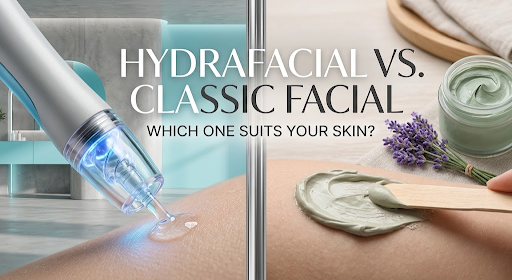
HydraFacial vs. classic facial comes down to the result you want. A HydraFacial uses a device based system to cleanse, exfoliate, extract congestion, and infuse hydrating serums, while a classic facial is a hands on treatment customized around cleansing, extractions, massage, masks, and skin specific products.
Both treatments can improve the look and feel of your skin. The better choice depends on whether your main concern is dehydration, congestion, and immediate glow, or relaxation, customized manual care, and a broader skin maintenance routine.
At World of Beauty Miami, clients can choose from professional facial treatments based on their skin type, concerns, and comfort level. Understanding how each facial works makes that decision much easier.
What Is a HydraFacial?
A HydraFacial is a multi step, device assisted facial that combines cleansing, gentle exfoliation, pore extraction, and serum infusion. The treatment uses a handheld wand with a vortex-like action to lift away dead skin cells and impurities while delivering hydrating and antioxidant serums.
The standard process follows three core stages. First, the skin is cleansed and exfoliated. Next, the device extracts oil, debris, and congestion from the pores. Finally, targeted serums are infused to hydrate and nourish the skin.
A published study of the HydraFacial clarifying treatment described a protocol that included cleansing and peeling solutions containing 7.5 percent glycolic acid and 2 percent salicylic acid, exfoliation, blue LED light for eight minutes, and an antioxidant hydration step.
Main Steps of a HydraFacial
| Step | What happens | Main purpose |
| Cleanse and peel | Gentle exfoliation removes dull surface cells | Brighter, smoother skin |
| Extract | Suction helps remove debris from pores | Less congestion and clearer pores |
| Hydrate | Antioxidant and hydrating serums are infused | Improved moisture and skin comfort |
| Optional boosters | Serums or LED light may be added | Support for acne, pigmentation, or aging concerns |
What Is a Classic Facial?
A classic facial is a traditional, hands on treatment performed by a licensed esthetician. It usually includes cleansing, steam, exfoliation, extractions when needed, facial massage, a mask, serum, moisturizer, and sunscreen.
Unlike a HydraFacial, a classic facial can be adapted in many different directions. Your provider may focus on hydration, acne, sensitivity, dullness, aging, or barrier repair depending on what your skin needs that day.
The biggest advantage is flexibility. A classic facial can be gentle enough for sensitive skin or more active for congested skin, depending on the products and techniques selected.
Typical Classic Facial Steps
| Step | What it involves | Why it matters |
| Consultation | Skin assessment and goal discussion | Helps customize the treatment |
| Double cleansing | Removes makeup, oil, and buildup | Prepares skin for treatment |
| Exfoliation | Physical or chemical exfoliation may be used | Improves texture and radiance |
| Steam and extractions | Softens pores and removes blockages when appropriate | Reduces congestion |
| Massage | Manual facial massage | Supports relaxation and circulation |
| Mask and serum | Products selected for your skin type | Targets hydration, oil, or sensitivity |
| Moisturizer and SPF | Finishing protection | Supports barrier health and sun defense |
HydraFacial vs. Classic Facial
The main difference is technique. A HydraFacial relies on a patented device for exfoliation, extraction, and serum delivery, while a classic facial relies more on the esthetician’s hands, products, and customized protocol.
Neither treatment is automatically better. A HydraFacial may be ideal when you want a quick, consistent, no downtime glow. A classic facial may be better when you want a more personalized experience, relaxation, or targeted manual extractions.
| Factor | HydraFacial | Classic Facial |
| Main method | Device assisted cleansing, extraction, and serum infusion | Hands on cleansing, massage, masks, and extractions |
| Best for | Dehydration, dullness, congestion, and quick glow | Relaxation, customized care, and general skin maintenance |
| Downtime | Usually none, though mild redness can occur | Usually none, but extractions may leave temporary redness |
| Comfort | Gentle suction and exfoliation | Can include steam, massage, and manual extractions |
| Customization | Booster serums and LED options | Highly customizable products and techniques |
| Immediate result | Often a smoother, hydrated, glowing look | Cleaner, calmer, and refreshed skin |
| Best schedule | Every 4 to 6 weeks for maintenance | Every 4 to 6 weeks, depending on skin needs |
Which One Suits Your Skin?
Choose a HydraFacial If You Have
HydraFacial is often a strong choice for people who want visible smoothness and hydration without significant downtime. It is commonly used for dull skin, clogged pores, uneven texture, dryness, and early signs of aging.
It may suit you well if you want a treatment before an event, prefer a device based approach, or want consistent extraction without aggressive manual squeezing. The treatment is generally described as suitable for many skin types, though active rashes, sunburn, or inflamed rosacea may require postponing treatment.
Choose a Classic Facial If You Have
A classic facial is often better if your priority is relaxation, personalized product selection, or a treatment that can change from visit to visit. It is especially useful for people who enjoy facial massage or need careful, gentle care for sensitive skin.
It can also be a good option if you want a provider to assess your skin regularly and adjust the treatment over time. For ongoing skin health, regular facials can support cleansing, hydration, and early attention to congestion or dryness. Learn more in the guide to the benefits of regular facials.
Results and Evidence
HydraFacial has clinical support for improving hydration and several measures of skin quality. A clinical study of the clarifying treatment used a protocol with exfoliating acid solutions, blue LED light, and antioxidant hydration, showing how the system can be adapted for congestion and acne prone skin.
Manufacturer reported clinical data for a HydraFacial hyaluronic acid booster described a 455 percent increase in hydration and a 57 percent reduction in the appearance of wrinkles immediately after treatment. These figures come from the company’s own reported study, so individual results can vary.
More broadly, HydraFacial has reported statistically significant improvements across measures of skin hydration, roughness, wrinkles, elasticity, and pore appearance in recent clinical data.
| Measure | Reported HydraFacial finding | What it means for you |
| Hydration | 455 percent increase immediately after booster treatment | Skin may feel plumper and more comfortable |
| Wrinkle appearance | 57 percent reduction immediately after booster treatment | Fine lines may look softer temporarily |
| Skin quality | Improvements in roughness, elasticity, and pores reported in clinical data | Texture and tone may improve with repeated sessions |
| Tolerability | Mild redness or irritation can occur for up to 72 hours | Most people return to normal activity quickly |
What About Acne and Congestion?
Both treatments can help with congestion, but they work differently. A HydraFacial uses suction to remove debris from pores, while a classic facial may use steam, exfoliation, and manual extractions.
If you have active inflamed acne, cystic breakouts, or irritated skin, tell your provider before booking either treatment. A facial should be adjusted or postponed when the skin is broken, infected, or highly reactive.
For deeper acne scarring, a facial alone may not be enough. Treatments such as microneedling or chemical peels may be more appropriate for textural scars, and you can compare them in the guide to microneedling vs. chemical peel for acne scars.
How Often Should You Get One?
For most people, a facial every four to six weeks fits the natural skin renewal cycle. This schedule allows enough time to maintain results without over exfoliating or irritating the skin.
HydraFacial is often booked monthly for glow, hydration, and pore maintenance. A classic facial can also be monthly, although someone with sensitive skin may prefer a longer gap between more active treatments.
The right frequency depends on your skin type, products, climate, stress levels, and whether you are combining facials with other treatments. The guide on how often you should get a facial explains how to build a practical schedule.
| Skin goal | Suggested starting frequency |
| General maintenance | Every 4 to 6 weeks |
| Dehydrated skin | Every 3 to 4 weeks initially |
| Congested pores | Every 3 to 4 weeks, adjusted by your provider |
| Sensitive skin | Every 6 to 8 weeks, using gentle protocols |
| Event preparation | About one week before the event |
Can You Combine Them?
Yes, many people alternate between HydraFacial and classic facial treatments. For example, you might choose a HydraFacial before an event for immediate hydration and glow, then choose a classic facial during another month for deeper relaxation and customized care.
Combination planning should always be professionally led. If you are also considering exfoliating treatments, spacing matters because too many exfoliating procedures close together can weaken the skin barrier.
A HydraFacial can complement other skin renewal services such as dermaplaning, which removes surface dead skin and fine facial hair. You can explore this option through World of Beauty Miami’s dermaplaning service.
Side Effects and Aftercare
Both treatments are generally low downtime, but no facial is completely risk free. Temporary redness, tightness, stinging, itching, or irritation can occur, especially if the skin is sensitive or recently exposed to strong active ingredients.
After either treatment, avoid harsh scrubs, strong acids, retinoids, saunas, and heavy sweating for the period recommended by your provider. Use a gentle cleanser, moisturizer, and broad spectrum sunscreen.
If you receive extractions, avoid picking at the skin. Let any small red marks settle naturally and keep the area clean and protected.
Aftercare Checklist
- Apply sunscreen daily.
- Avoid strong exfoliants until your provider approves them.
- Keep the skin hydrated with a gentle moisturizer.
- Avoid makeup for the rest of the day if your skin feels sensitive.
- Do not pick at extraction sites or flaking skin.
- Follow the product recommendations given by your esthetician.
HydraFacial or Classic Facial: Final Decision
Choose a HydraFacial if you want a device assisted treatment that focuses on exfoliation, pore cleansing, hydration, and a fast glow. It is a practical option for dull, dehydrated, or congested skin with little downtime.
Choose a classic facial if you value a fully customized, hands on treatment with massage, masks, and flexible product choices. It is ideal for relaxation, sensitive skin, and ongoing maintenance.
If you are unsure, start with a consultation. A professional can examine your skin, discuss your concerns, and recommend the best facial treatment for your goals. You can also explore World of Beauty Miami’s facial services to see the available treatment options.
For people focused on texture, scars, or collagen stimulation rather than surface hydration, microneedling may be a better match. You can learn how it works in the guide to what microneedling is.
Book the Right Treatment
The best facial is the one that matches your skin condition, lifestyle, and comfort level. A HydraFacial offers a structured, technology led glow, while a classic facial offers customization and a more traditional spa experience.
If you want help choosing, contact the team through World of Beauty Miami’s contact page. A professional assessment is the safest way to decide whether a HydraFacial, classic facial, or another skin treatment is right for you.
