
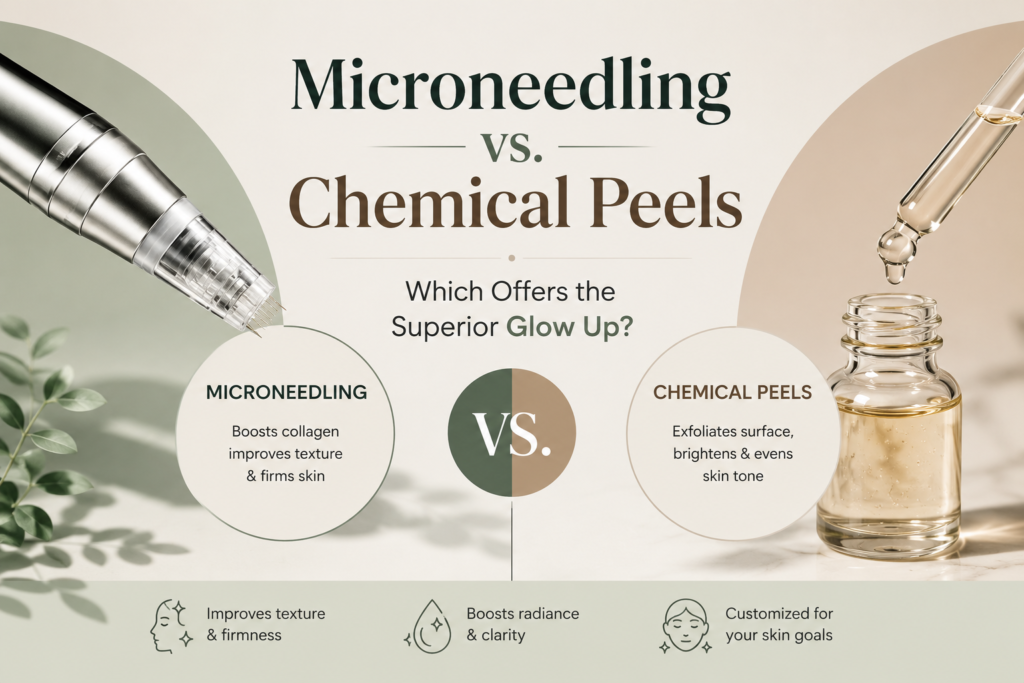
Achieving healthier, brighter, and smoother skin often involves choosing treatments that match specific concerns such as wrinkles, acne scars, uneven texture, and pigmentation.
The discussion around Microneedling vs. Chemical Peels continues to grow because both treatments are widely used for skin rejuvenation but work through different biological processes.
Microneedling focuses on stimulating the skin’s natural repair process through controlled micro injuries, while chemical peels use specialized solutions to remove damaged outer layers of skin. Both treatments can improve skin appearance, but the ideal choice depends on individual skin goals, sensitivity, and concerns.
Understanding how these treatments work can help individuals make informed decisions about which approach may provide the best results.
Understanding Microneedling
Microneedling is a minimally invasive skin treatment that uses fine needles to create controlled micro channels in the skin. These small injuries activate the body’s natural healing response and encourage collagen and elastin production.
Collagen is a structural protein responsible for skin firmness and strength. As collagen production increases, the skin may appear smoother, tighter, and more refreshed.
Microneedling is commonly used for:
| Skin Concern | How Microneedling May Help |
| Acne scars | Supports smoother skin texture through collagen remodeling |
| Fine lines | Encourages collagen production |
| Enlarged pores | May improve overall skin texture |
| Uneven texture | Promotes skin renewal |
| Mild pigmentation concerns | Can support more balanced appearance |
Professional microneedling treatments are usually performed with sterile equipment and customized settings based on skin type and treatment goals.
For individuals interested in understanding the procedure in more detail, resources explaining what is microneedling provide additional information about the process and expected outcomes.
Understanding Chemical Peels
Chemical peels are skin resurfacing treatments that use carefully selected chemical solutions to exfoliate damaged skin cells from the surface. Depending on the type and strength of the peel, treatment can target different layers of the skin.
Chemical peels are categorized based on their depth:
| Type of Peel | Depth | Common Uses |
| Superficial peel | Outer skin layer | Brightening and mild texture improvement |
| Medium peel | Middle layers of skin | Wrinkles, pigmentation, deeper texture concerns |
| Deep peel | Deeper skin layers | More significant skin resurfacing |
Common ingredients used in chemical peels include:
• Glycolic acid
• Salicylic acid
• Lactic acid
• Trichloroacetic acid
Each ingredient works differently depending on concentration, skin condition, and treatment purpose.
Microneedling vs. Chemical Peels: Main Differences
Although both treatments improve skin quality, their mechanisms are different.
| Feature | Microneedling | Chemical Peels |
| Main action | Stimulates natural healing response | Removes damaged skin layers |
| Primary benefit | Collagen production | Skin exfoliation and renewal |
| Common concerns | Acne scars, texture, fine lines | Pigmentation, dullness, uneven tone |
| Downtime | Usually minimal | Depends on peel strength |
| Skin penetration | Creates controlled micro channels | Uses chemical exfoliation |
The better option depends on whether the main goal is rebuilding skin structure or improving surface appearance.
How Microneedling Improves Skin
The main benefit of microneedling comes from collagen induction therapy. The controlled micro injuries signal the skin to begin a repair process.
During healing, the body produces new collagen and elastin fibers. This process may gradually improve skin firmness and texture.
Research published in dermatology literature has shown that microneedling can be effective for improving acne scars, particularly when performed through appropriate techniques and multiple sessions.
| Microneedling Factor | Details |
| Treatment purpose | Skin renewal and collagen stimulation |
| Typical sessions | Multiple treatments may be recommended |
| Results timeline | Improvements develop gradually |
| Common areas | Face, neck, and other textured skin areas |
The gradual nature of collagen remodeling means results often continue improving after treatment.
How Chemical Peels Improve Skin
Chemical peels work by removing damaged skin cells and encouraging the growth of newer skin layers.
This exfoliation process can improve concerns related to:
• Dull complexion
• Sun damage
• Uneven pigmentation
• Mild wrinkles
• Certain acne concerns
The effectiveness of a chemical peel depends on choosing the appropriate formula and strength for the individual’s skin condition.
A professional evaluation helps determine whether a superficial, medium, or deeper peel is suitable.
Effectiveness Comparison
Both treatments have strong applications, but they are often chosen for different reasons.
| Concern | Treatment Often Considered |
| Acne scars | Microneedling is commonly used for texture improvement |
| Surface dullness | Chemical peels may provide faster exfoliation |
| Fine lines | Both treatments may help depending on severity |
| Uneven texture | Both may improve skin smoothness |
| Pigmentation | Chemical peels are commonly selected |
| Collagen support | Microneedling has a direct collagen stimulation effect |
The best treatment choice depends on the cause of the skin concern rather than the appearance alone.
Scientific Data and Skin Rejuvenation Statistics
The demand for non surgical skin treatments has increased globally as more people seek procedures with minimal recovery time.
According to the American Society of Plastic Surgeons, minimally invasive cosmetic procedures continue to represent a significant portion of aesthetic treatments performed each year.
| Category | Information |
| Treatment type | Minimally invasive skin rejuvenation |
| Common goals | Texture improvement, collagen support, skin renewal |
| Popular treatment areas | Face, neck, and acne scar areas |
| Main patient interest | Natural looking skin improvement |
Studies on collagen induction therapy and chemical exfoliation continue to evaluate their effectiveness for different skin concerns and patient groups.
Choosing Between Microneedling and Chemical Peels
The decision between these treatments should be based on skin condition, desired outcome, and professional assessment.
Microneedling may be preferred by individuals who want to address:
• Acne scars
• Skin texture problems
• Fine lines
• Reduced firmness
Chemical peels may be preferred by individuals focused on:
• Uneven skin tone
• Surface pigmentation
• Dull skin
• Sun related skin changes
Recovery and Results: Microneedling vs. Chemical Peels
Recovery is an important factor when comparing skin rejuvenation treatments. Although both procedures are considered minimally invasive, the healing process can vary depending on treatment intensity, skin condition, and individual response.
Microneedling usually involves mild redness and sensitivity after treatment. Chemical peel recovery depends heavily on the strength of the peel because deeper exfoliation can require more downtime.
| Treatment | Typical Recovery Experience |
| Microneedling | Redness, mild swelling, and sensitivity for a few days |
| Superficial chemical peel | Mild peeling and dryness for several days |
| Medium chemical peel | More noticeable peeling and longer recovery |
| Deep chemical peel | Extended healing period with medical supervision |
Following aftercare instructions is important for protecting the skin barrier and supporting healthy results.
Microneedling Aftercare
After microneedling, the skin may temporarily appear red because of the controlled stimulation created during treatment.
Common aftercare recommendations include:
• Avoiding direct sun exposure
• Using gentle skincare products
• Applying recommended moisturizers
• Avoiding harsh exfoliating ingredients until the skin recovers
The skin continues its collagen remodeling process after the visible redness decreases. This means improvements may continue appearing over several weeks or months.
A detailed guide about maintaining results after treatment can be found through resources covering microneedling aftercare.
Chemical Peel Aftercare
Chemical peel aftercare focuses on protecting newly exposed skin layers while the skin renews itself.
Important considerations may include:
• Using sunscreen regularly
• Avoiding picking or removing peeling skin
• Following recommended skincare routines
• Limiting exposure to strong active ingredients during recovery
The amount of peeling does not always determine the quality of the result. A properly selected peel formula and strength are more important than aggressive exfoliation.
Which Treatment Works Better for Acne Scars?
Acne scars are one of the most common reasons people explore skin resurfacing treatments. The right option depends on the type of scar.
There are several categories of acne scars:
| Acne Scar Type | Treatment Consideration |
| Rolling scars | Collagen stimulating treatments may help improve texture |
| Boxcar scars | Combination approaches may be considered |
| Ice pick scars | Often require specialized treatment plans |
| Dark marks after acne | Chemical exfoliation may help improve appearance |
Microneedling is frequently used for depressed acne scars because it focuses on stimulating collagen remodeling.
Chemical peels may be useful for post acne discoloration and surface unevenness. In some cases, professionals recommend combining different treatments for comprehensive improvement.
For a detailed comparison focused specifically on acne scarring, information about microneedling vs chemical peel for acne scars provides additional educational insight.
Skin Types and Treatment Suitability
Different skin types may respond differently to resurfacing treatments. A personalized assessment is important because factors such as sensitivity, pigmentation tendency, and current skin condition influence treatment selection.
| Skin Consideration | Treatment Planning Factor |
| Sensitive skin | May require gentler approaches |
| Darker skin tones | Careful product and technique selection is important |
| Active acne | May require evaluation before treatment |
| Sun damage | Exfoliation treatments may be considered |
| Fine lines | Collagen focused treatments may help |
Professional guidance helps reduce the risk of irritation and supports safer treatment planning.
Can Microneedling and Chemical Peels Be Combined?
Some skincare plans combine different treatments to target multiple concerns. However, combining procedures requires careful timing and professional supervision.
Microneedling and chemical peels affect the skin in different ways. Performing them too closely together may increase irritation or compromise the skin barrier.
A customized treatment schedule considers:
• Skin sensitivity
• Treatment strength
• Recovery time
• Overall skincare goals
Combination approaches should always be planned by qualified professionals.
Cost Comparison: Microneedling vs. Chemical Peels
Treatment costs vary depending on location, provider experience, number of sessions, and the specific products or equipment used.
| Cost Factor | Microneedling | Chemical Peels |
| Number of sessions | Often requires multiple treatments | Depends on peel type and goal |
| Treatment depth | Adjustable through device settings | Adjustable through chemical strength |
| Main cost influence | Equipment and provider expertise | Product formula and treatment level |
Price should not be the only factor when choosing a skin treatment. Proper assessment and safe techniques are essential for achieving desirable outcomes.
Long Term Benefits of Both Treatments
Both microneedling and chemical peels can support healthier looking skin when selected appropriately.
Microneedling focuses more on improving skin structure through collagen stimulation, while chemical peels focus more on renewing the surface layer.
| Long Term Goal | Possible Treatment Advantage |
| Stronger skin texture | Microneedling |
| Brighter appearance | Chemical peels |
| Collagen support | Microneedling |
| Surface renewal | Chemical peels |
| Overall skin maintenance | Both may provide benefits |
Maintaining results also depends on daily skincare habits, including sun protection and consistent skin care routines.
Other Skin Rejuvenation Options
Skin rejuvenation includes many treatments designed to improve appearance, texture, and overall skin health.
Some individuals explore options such as customized facials, dermaplaning, laser treatments, or other aesthetic procedures depending on their concerns.
Educational resources about professional facial treatments, such as facial services in Miami, can help explain how different approaches support skin maintenance.
Frequently Asked Questions
Is microneedling better than chemical peels?
Neither treatment is universally better. Microneedling may be more suitable for collagen stimulation and texture concerns, while chemical peels may be better suited for surface exfoliation and pigmentation issues.
Which treatment has less downtime?
Microneedling generally has shorter visible recovery for many individuals. However, chemical peel downtime depends on the strength of the peel.
How many sessions are needed?
The number of treatments varies based on skin concerns and individual response. Multiple sessions are often recommended for noticeable improvement.
Are chemical peels safe for all skin types?
Chemical peels can be suitable for many skin types when properly selected. Professional evaluation is important to reduce risks.
Can microneedling remove wrinkles permanently?
Microneedling may improve the appearance of fine lines by supporting collagen production, but it does not stop natural aging.
Final Verdict
When comparing Microneedling vs. Chemical Peels, the superior choice depends on the individual’s skin concerns and desired results.
Microneedling is often chosen for improving texture, acne scars, and collagen support. Chemical peels are commonly selected for exfoliation, brightness, and improving uneven skin tone.
Both treatments have established roles in modern skin rejuvenation. The most effective approach is one that matches the treatment method with the specific condition being addressed.
A professional consultation can help determine whether microneedling, chemical peels, or another skincare approach is the right option.
For additional information about aesthetic treatments and skin care solutions, educational resources from World of Beauty Miami provide further details about available skin rejuvenation approaches.